By LeAnn Glover | YPFP Rising Expert for Africa | June 16, 2023 | Photo Credit: Wikimedia Commons
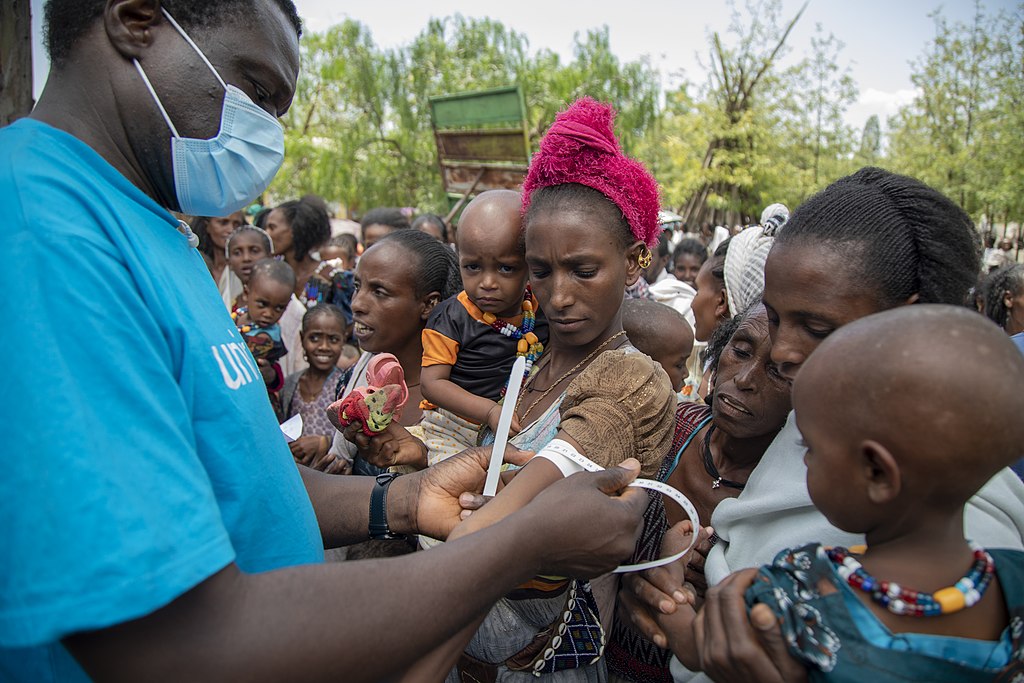
Drought has staked its claim on the lives of cattle in the southern Ethiopia, leaving food production stagnant and threatening famine. According to the United Nations, this dire situation has left an estimated 12 million people requiring food support from the UN World Food Program. Many who fled the conflict in Tigray in northern Ethiopia, a war sparked by ethnic and political tensions, have arrived in the country’s south only to have drought further displace them. This has left local leaders scrambling to prevent mass hospitalization due to malnutrition. As the world turns its focus on the Russia-Ukraine war, Ethiopia and its neighbors must find their own innovative solutions to the battle against food insecurity.
Local examples abound from the impact of the drought, like in the village of Kura Kalicha, which Al Jazeera covered. In 2015, the lush fields and rich soil of the Antsokia Valley were the main source of farmers’ income and trade, and drove the local economy. However, due to increasing temperatures and fewer rain cycles, southern Ethiopia succumbed to an unforgiving storm, El Nino, and today the village is in the midst of one of its harshest droughts. Dozens of cattle essential to its villagers lay dead on the scorched land, decomposing into the earth, and more than 100 women, children, and elders in Kura Kalicha are severely malnourished because of the drought, a scenario playing out in villages and towns throughout southern Ethiopia.
Ethiopia traditionally relies heavily on its livestock as a food source, but southern Ethiopia has resorted to other food sources such as corn and maize. Without adequate rainfall in the upcoming rain cycle, though, these grain-based food sources will wane in availability and actually increase Ethiopia’s food insecurity risk. Many southern Ethiopians continue to flee the region in search of food and water, with some migrating to overcrowded nearby camps in hopes of survival; others remain near their homes with few good options to survive.
While this dire picture illustrates why southern Ethiopians are hopeful for a successful rain season, its neighbors expect yet another year without rain. Somalia and Kenya know drought all too well. The Horn of Africa already leans on humanitarian aid and development agencies around the world for food support, and the drought in the region has produced a human catastrophe, with no end in sight. While citizens implore the Ethiopian government for aid, the government itself seeks help from foreign benefactors. However, the international community has pivoted its attention from the crisis in Ethiopia due to stagnating grain exports, an increase in food and fuel prices, and the demands of financial support to Ukraine following Russia’s invasion. The government receives approximately $327.5 million in funding from the World Bank and World Food Program to address the crisis the four-year long drought has caused, but many other potential partner nations can do little to augment Ethiopia’s aid funding while still reeling from the Ukraine-Russia war and post-pandemic losses. Humanitarian agencies and foreign governments have yet to respond effectively to the Ethiopian government’s statement requesting increased food support, and current aid levels limit the government’s ability to support the millions of civilians affected by the drought. The nation has been forced to ration its limited aid among people within the southern region. Organizations such as Plan International have stated that the current situation and lack of food assistance will exacerbate the looming hunger crisis within the country.
To combat the rising crisis in southern Ethiopia, foreign organizations must look to to provide accessible and cost-effective forms of grain to civilians within the affected areas while forgoing one of their largest traditional grain suppliers, embattled Ukraine. To combat growing food insecurity, organizations could introduce diverse crops other than wheat and maize to decrease the cost of produce and combat monocropping. Crops such as sorghum, quinoa, and millet could be added to Ethiopia’s agricultural supply to limit its import reliance and maintain its agricultural infrastructure.
Ethiopia could also work to lessen its reliance on weather-sensitive crops that require rain for agricultural growth. The brunt of the economic investment over the last two years has been in agriculture and rain-fed farming systems, which, due to lack of rainfall, has not yielded its anticipated goal. As a result, the nation has relied more on organizations such as the IMF to alleviate its national disaster, increasing the country’s debt. The drought in southern Ethiopia has had a devastating impact on millions of people, worsening the already existing dual crises of food insecurity and malnutrition. With the upcoming rain cycle unpredictable, the country’s food sources may become even more limited.
As the government continues its request for assistance from humanitarian agencies and its allies, it is crucial for the international community to step up and provide aid to the country, and address this humanitarian catastrophe before it’s too late.
LeAnn Glover is YPFP’s 2023 Rising Expert on Africa. She is a Project Assistant based in Washington, D.C, where she works mainly on locally-led development, human rights, climate change and African development.




 Charged Affairs
