By Alejandro Turino | Rising Expert for Latin America | February 10, 2024 | Photo Credit: iStock
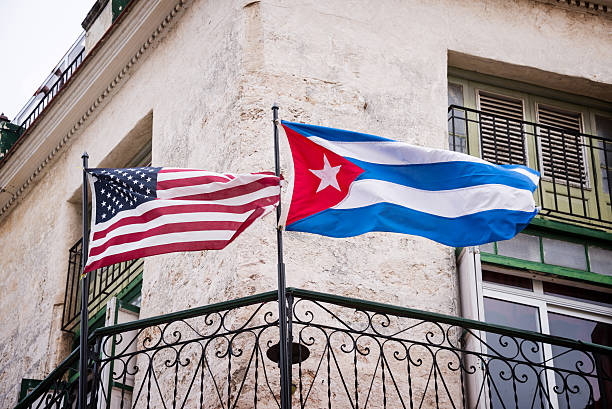
Early in September of 2023, top Cuban and American officials met in Washington for the first time in over a year. The meeting focused largely on migration issues, as a record number of Cubans are migrating to the United States through its southern border. Talks also covered human rights and other issues of bilateral interest, according to a US State Department spokesperson. Although these are important policy issues that require urgent bilateral cooperation, the high-level meeting also presented US President Joe Biden with an opportunity to engage and motivate the Cuban government to play a bigger geopolitical role in regional stability. Havana, if correctly incentivized, has the diplomatic cache to help Washington address a number of issues in the region, particularly fair elections in Venezuela and peace negotiations in Colombia.
Fair Elections in Venezuela
Over the last two decades, Cuba and Venezuela have developed a strong relationship centered on economic, ideological, and security cooperation. In recent years, the two countries have become more mutually dependent than ever; Venezuela relies on Cuban security and intelligence personnel to suppress dissent within the country, while Cuba relies on Venezuelan oil to keep the island’s economy running. Cuba’s apparent control within Venezuela’s military and political leadership worries US officials, but it also offers an important opportunity. Washington can and should engage the island nation to use its influence and help shape better democratic and human rights outcomes in Venezuela. As a promoter of human rights in the Western Hemisphere and a country affected by the Venezuelan migration crisis, which has been spurred by human right violations, the United States has a key interest in Caracas being more democratic and respectful of human rights.
The first event in which we could see this in action is the Venezuelan presidential and congressional elections of 2024 and 2025. Currently, the elections are en route to be less than fair, with certain opposition politicians currently banned from running and no electoral observers present, which are key personnel to make sure voting processes are properly regulated and accurate. If this continues, the electoral results will be rightly viewed as fraudulent and only worsen the country’s already fragile political and human rights situation. Currently, the state continues to persecute and criminally prosecute human rights defenders, while the United Nations and International Criminal Court documented crimes against humanity being committed with the knowledge of high-ranking authorities.
Washington could engage Venezuela bilaterally and press for election reforms in exchange for relieving sanctions, particularly on the restrictions of US oil and gas companies to operate within Venezuela and provide Caracas with much-needed revenue streams. However, this is politically difficult because of vocal opposition from exile groups inside the US opposed to negotiating directly with the government of Nicolas Maduro, which they see as criminal and illegitimate. Instead, the Biden Administration should engage a third party, Cuba, to use its vast influence within the Venezuelan government and push Caracas to ensure fair elections. Ideally, this would entail negotiating with opposition leaders and allowing election observers into the country. At the very least, given the outsized role Cuba plays inside Venezuela’s security establishment, and Maduro’s past use of security forces to intimidate and repress political dissenters, Havana could be useful in making sure the elections are bloodless and without voter intimidation tactics.
Total Peace in Colombia
On August 7, 2022 Colombian President Gustavo Petro announced that he would be implementing a total peace effort to end violence in Colombia. The plan aims to dismantle multiple illegal armed groups at the same time. This includes implementing previous commitments made in the 2016 peace accords with the Revolutionary Armed Forces of Colombia (FARC), dialoguing the National Liberation Army (ELN) and addressing other illegal armed groups through a submission process. Both FARC and the ELN are irregular armies that started their struggle against the Colombian state in pursuit of left-wing marxist ideologies. Since then, both organizations have turned to more criminal activities to advance their goals, like kidnapping, extortion, and attacks on economic infrastructure.
Thus far, the Petro Administration’s total peace negotiations have yielded-at best-mixed results. Despite serious negotiations and ceasefires, data shows that, one year in, security has not significantly improved: homicides remain high (just 1% lower than 2022), kidnappings went up, and assassinations of social leaders barely decreased. These figures show how difficult achieving total peace is; negotiating with so many stakeholders makes it hard to reach common goals and agree on what peace looks like. FARC and the ELN not only have different goals in the negotiations, FARC largely wants political representation while the ELN wants to continue the struggle against the government. Splinter groups within the organizations have also emerged and separated themselves in opposition to peace negotiations.
Cuba has historical ties to both FARC and the ELN, presumably driven by all parties’ shared Marxist-Leninist ideologies. A leaked 2010 US diplomatic cable stated the common presence of FARC members on the island, since Havana “allows these groups to enjoy R&R [rest and relaxation] in Cuba and receive medical care and other services.” Furthermore, the cable suggested the Cuban government is able to influence the FARC, saying “the Cuban Communist Party International Department (PCC/ID) has close relationships with the Clandestine Communist Party of Colombia (PCC) which serves as the political wing of the FARC, and to some extent the ELN as well.” Given this level of influence, it is no surprise that Cuba has been a mediator in past peace negotiations between the Colombian government and both the FARC and ELN.
Washington has historically been Colombia’s number one security partner. Since the turn of the century, Bogota has been a top recipient of US security funding. Almost all of this American security investment is to help Colombia – a main origin point for drugs such as cocaine – cut drug trafficking to the United States. Both FARC and ELN have participated in drug trafficking to finance their insurgencies. As such, the US government is not only a proponent of peaceful negotiations, but also has a key role to play within them. Part of that role should include engaging Cuba to use its influence with both the FARC and ELN to move total peace negotiations forward. Havana not only has the diplomatic credibility of having been a mediator of negotiations with the groups, both between FARC and the Colombian government in 2016 and the ELN and Bogota in 2018, it also clearly has direct lines of communication to FARC and ELN leadership. Cuba may have the ability to bring splintered factions of both groups to the negotiating table and actually get them to reach and abide by ceasefire agreements. While this would not be a panacea, it would certainly go a long way towards pacifying parts of Colombia, a huge step towards total peace. This, in-turn, would create further trust between belligerent parties and affected populations, and solidify further negotiations even more.
What Will it Cost?
Nothing in diplomacy is free. The Cuban government will not engage in these activities and help Washington without the prospect of some tradeoff. So, what does Havana actually want? And what is Washington willing to concede?
One thing becomes obvious: removing Cuba from the US State Department’s Sponsor of Terrorism List. This list is a foreign policy mechanism that sanctions countries deemed to have provided support for acts of international terrorism. Coincidentally, Cuba was initially put on the list for its support of organizations like FARC. The FARC eventually had its terrorist organization designation revoked by President Biden in 2021.
Cuba was originally removed from the list in 2015, when US President Barack Obama normalized diplomatic relations with Havana, to only then be added again in 2021 by US President Donald Trump. Being on the list again makes it extremely difficult for Cuba to receive desperately needed humanitarian aid, engage with the world economy, and even have academic and cultural exchanges with other nations. Obviously, officials in Havana desperately want to have the country removed from the list, often objecting to Cuba being on it in the first place.
Cuban officials are not the only ones who see the island being on the state-sponsored list as unnecessary. Civil society organizations like the Washington Office on Latin America (WOLA), Republican and Democratic US officials, and journalists and academics also agree that not only should Cuba not be on the list, its presence on the list unnecessarily hurts US-Cuba relations.
For the Biden administration, taking Cuba off the list is a small price to pay to incentivize Havana to use its influence in Venezuela and Colombia to advance fair elections and peace negotiations. The decision would not be viewed as controversial or a deviation from recent diplomatic norms (Cuba was off the list as recently as 2020), and it would clearly have the support of large pockets of the government and civil society. The only significant resistance would come from the Cuban exile community in South Florida, which rejects any policy that could potentially benefit the island’s current government. However, the Biden administration and the Democratic Party have little chance of winning the support of these groups anyway, which largely back and vote for Republican candidates. If Biden is reelected next year, taking Cuba off the list would not have significant enough political repercussions to harm his presidency.
Diplomatically engaging Havana and taking the island nation off the state-sponsored list might seem a small thing, but it has the power to help solve two of the biggest challenges to democracy and security in Latin America.
Alejandro Turino (he/his) is YPFP’s 2023 Rising Expert for Latin America. He is currently an operations specialist at Premise Data, where he works at the intersection of technology and economic development.

 Charged Affairs