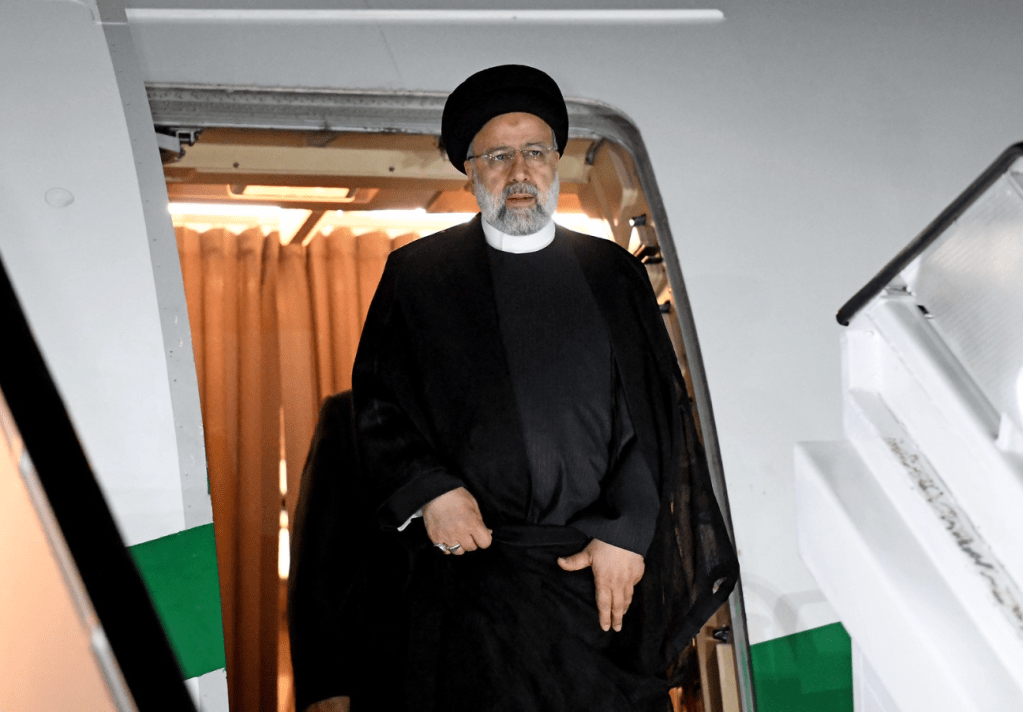
By Ethan Dincer | Rising Expert on the Middle East | May 22, 2024 | Photo Credit: Flickr
This past Sunday, reports of a helicopter experiencing a ‘hard landing’ emerged from northern Iran near the border with Azerbaijan. Iran’s President Ebrahim Raisi, Foreign Minister Hossein Amir-Abdollahain, and six others were on board. Rescue teams announced late Monday that no passengers or crew survived the crash. Following the announcement, the country entered into an official state of mourning, and Iran’s Supreme Leader Ayatollah Ali Khamenei appointed the first Vice President Mohammed Mokhber as interim president and Deputy Foreign Minister Ali Bagheri Kani as acting foreign minister. Per Iran’s constitution, Mokhber must hold an election within the next 50 days to choose Raisi’s successor.
The crash comes at a time when the Islamic Republic faces increased international attention due to their ongoing conflicts with Israel over operations in Gaza, ardent support for Russia in the war in Ukraine, and the legacy of the 2022 Women, Life, Freedom protests inspired by the killing of Mahsa Amini. Some factions within Iran were quick to claim foul play over the crash – conspiracy theories spread on social media and state television, with one channel suggesting that Mossad agents in the East Azerbaijan province must be investigated. While the Iranian state maintains that the crash was due to a technical failure, they have pointed to a potential link between Western sanctions and Iran’s aging aircraft fleet, claiming that the crashed helicopter could not be properly maintained due to sanctions and trade restrictions on replacement parts.
Raisi, often seen as a cog in the hardline political system ruled by Ayatollah Khamenei, leaves behind a legacy of oppression and judicial crackdowns that earned him the nickname “the butcher of Tehran.” Some Iranians celebrated his death, blaming him for the state’s repressive response to the Women, Life, Freedom protests and contributing to a culture of fear for Iranian women. While protests and celebrations remain muted during this mourning period, popular movements may make a resurgence as Raisi’s successor is chosen.
Iran must now choose a new president. All candidates require approval by the Guardian Council, an elite political body, before qualifying for an election. After that, the Supreme Leader can either hand-pick a candidate in a rigged election or make the election quasi-democratic, with multiple viable candidates. Iranian elites generally viewed Raisi as the preferred successor to the aging Ayatollah. As Raisi’s death makes Khamenei’s succession more uncertain, Khamenei will likely hand-pick the election’s winner.
While the next few months will be telling for the future of Iran’s domestic, political, and social trajectory, Raisi’s death may also temper Iran’s actions towards Israel. A few weeks ago, Iran fired missiles directly into Israeli territory for the first time, sparking fears of the Israel-Hamas conflict broadening. Given the president’s death, it is likely that Iran’s sharpened regional offensives will take a back seat into the summer as they focus on ensuring domestic stability. This may give Israel slight breathing room to continue with plans of regionalizing their conflict. However, continued international scrutiny — including this week’s ICC arrest warrants — means Israel is too preoccupied to shift attention towards Iran.
Globally, Raisi’s death and Iran’s unstable political future permit Western leaders the possibility of resuming backchannel talks with Iran over critical issues, like regulation of their nuclear program. While President Joe Biden’s administration has extended condolences, it has made no further overtures, and the next few weeks may present an opportunity for Western leaders to engage in diplomacy to shape Iran’s regional standing. However, with only a few months remaining before the U.S. presidential election and increased attention on Biden’s approach in the region due to the conflict in Gaza, it is unlikely his administration will lean in too heavily to engage publicly with Iran in the aftermath of the crash.
Ethan Dincer is the 2024 Rising Expert on the Middle East. He is a consultant at London Politica, and previously worked at the Middle East Institute, U.S. Department of State – Embassy Ankara, the Oxford Middle East Review, and the Middle East Policy Council. Ethan is currently completing his MSc in International Political Economy at the London School of Economics and Political Science.
 Charged Affairs