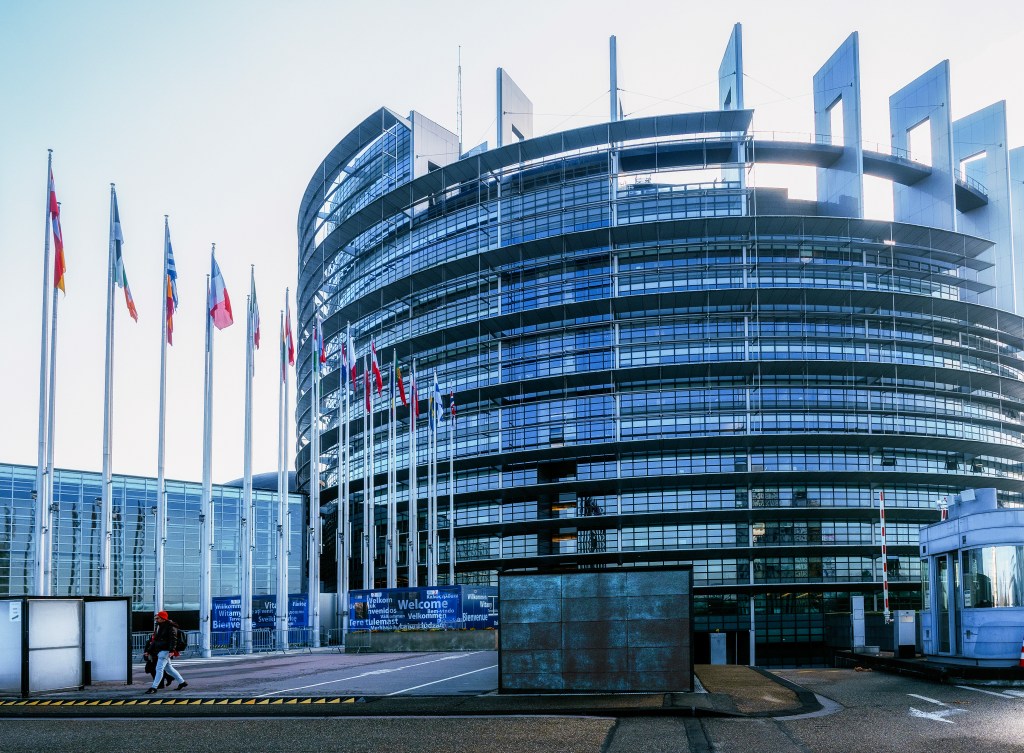
By Bianka Koka Stuit | YPFP Member | June 21, 2024 | Photo Credit: Flickr
The 2024 European Parliament elections, held on June 9th across all 27 EU Member States, unveiled a dramatically shifting political terrain in Europe. This election cycle was marked by the rise of far-right parties and a significant reshuffling among traditional political groups, indicating changes in political and social currents within the European Union.
Rise of Far-Right Parties
One of the most striking outcomes of the 2024 European Parliament elections is the success of far-right parties. Marine Le Pen’s National Rally (RN) in France captured a record 31.5% of the vote, triggering political upheaval and the dissolution of the French parliament. Similarly, the Alternative for Germany (AfD) achieved a historic second place in Germany, surpassing the ruling Social Democratic Party (SPD). In Italy, the Brothers of Italy (FdI) emerged as one of the largest delegations in the European Parliament. These results reflect a growing nationalist and anti-establishment sentiment, driven by economic worries, immigration fears, and distrust in traditional political structures.
Center-Right Consolidation
The European Conservatives and Reformists (ECR) and Identity and Democracy (ID) groups now control 25% of the seats in the European Parliament, surpassing traditional giants like the European People’s Party (EPP) and the Progressive Alliance of Socialists and Democrats (S&D). This shift highlights growing support for an agenda emphasizing national sovereignty and EU skepticism, signaling a broader rightward shift in European politics.
Challenges for Centrists and the Left
Centrist and left-wing parties faced significant setbacks. The S&D and Renew Europe (RE) groups suffered notable losses in key countries, including Germany, Italy, and Ireland. Germany’s SPD and France’s traditional centrist party, The Republicans, struggled against the far-right surge. These parties’ open policies on immigration and European integration stand in stark contrast to rising nationalist sentiments. The Green/EFA group also saw losses, particularly in Germany and France, indicating a broader challenge for progressive parties.
Implications for EU Policies
The power shift within the European Parliament has profound implications for EU governance and policy-making. The results of this election and recent global developments seem to be undermining support for the Green Deal, an ambitious European Union policy initiative aimed at making Europe the first climate-neutral continent by 2050. The ongoing energy crisis, exacerbated by geopolitical tensions and the conflict in Ukraine, has highlighted Europe’s dependency on external energy sources and caused economic instability that has shifted public focus towards economic recovery over long-term environmental goals.
Far-right parties have capitalized on these anxieties, framing the Green Deal as an elitist agenda imposing undue burdens on ordinary citizens and traditional industries. Concerns about losing a competitive edge to countries with looser environmental regulations, coupled with a reprioritization of defense and energy security, have overshadowed climate ambitions, while misinformation and skepticism about climate policies have further polarized public opinion.
Another significant policy potentially jeopardized by the election results is the EU’s Digital Services Act (DSA), legislation aimed at creating a safer and more accountable online environment by regulating digital platforms, combating illegal content, and ensuring transparency in algorithmic decision-making. Far-right and nationalist parties often oppose regulatory measures perceived as restricting free speech or imposing additional burdens on businesses and could potentially stall or weaken the implementation of the DSA. These parties’ influence could lead to calls for less stringent regulations and a focus on national sovereignty over collective EU digital governance, complicating efforts to enforce a unified digital market policy across member states.
The Road Ahead
The results of the 2024 European Parliament elections highlight the need for deeper solutions to voter discontent. The rise of nationalist and far-right parties challenges the European Union’s principles of unity and collective action. To counter this, European Union leaders must showcase tangible benefits of membership – including economic resilience, social cohesion, and cooperation. Strategic planning and innovation, particularly in green technologies and digital transformation, are key to maintaining competitiveness in a dynamic global economy.
Combating misinformation is also essential, as fake news and disinformation has polarized societies and undermined trust in democratic institutions. The European Union needs to invest in media literacy, support independent journalism, and counter disinformation campaigns. Strengthening its role in global affairs is vital to uphold its values and influence in an increasingly multipolar world, necessitating enhanced diplomacy and global partnerships to address shared challenges like climate change, security threats, and human rights issues.
Ultimately, the 2024 elections highlight the need for a cohesive and innovative European Union that can adapt to an ever-changing landscape. By addressing the root causes of voter discontent, fostering proactive engagement, and tackling modern political complexities, the European Union can safeguard stability, promote unity, and ensure it remains a beacon of democracy and progress in the 21st century.
Bianka Koka Stuit is the Deputy Director of Communications at YPFP. Prior to this role, she worked as a Parliamentary Assistant in the European Parliament, and most recently, at the Center for European Progression in Brussels. Bianka speaks English, Hungarian, Italian and French. Follow her on LinkedIn.



 Charged Affairs