By Sunoo Lee | YPFP Member | June 22, 2024 | Photo Credit: Flickr
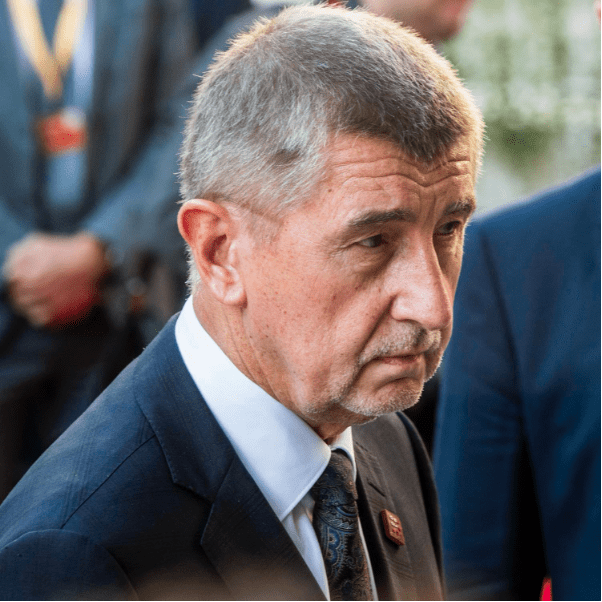
The Czech Republic is scheduled to elect a new government next year which will almost certainly impact Prague’s support for Kyiv. The leader of the main opposition party and Czech Prime Minister from 2017-2021, Andrej Babiš, leads in the polls by a wide margin. He will likely return to power if his party emerges victorious, which would raise doubts about the future of the Czech Republic’s support for Ukraine.
Under the current Prime Minister, Petr Fiala, the Czech Republic has been a staunch supporter of Ukraine. Following Russia’s 2022 invasion, the government joined a large coalition to impose punitive sanctions on Russia, stopped issuing visas to Russian citizens, and led a multi-country initiative to provide ammunition to Ukraine. However, Fiala’s government remains deeply unpopular within the country. The Czech public is also no longer supportive of the government’s position towards Ukraine. A poll in November 2023 found that for the first time since Russia’s invasion of Ukraine started, the majority of Czechs are not in favor of military support for Ukraine.
Babiš’s track record on Russia and Ukraine is mixed. Before becoming Prime Minister in 2017, Babiš characterized sanctions imposed on Russia as “nonsense.” While serving as Prime Minister in 2021, Babiš announced that Russian intelligence agents were complicit in two explosions of ammunition deposits in the city of Vrbetice. The 2014 explosion killed two people, ad the Czech government responded to these revelations by expelling Russian diplomats it considered to be spies. Babiš also stirred up controversy when he stated that the explosions were not an act of state terrorism, but rather a botched operation to destroy goods purchased by a Bulgarian arms dealer.
In February 2022, Babiš expressed strong support for Ukraine, but his rhetoric has gradually shifted over time. In February 2024, he voiced opposition to Ukrainian membership in the European Union, claiming that it would be a “complete disaster,” and referred to Ukraine as a corrupt country. He also criticized Karel Řehka, the Chief of the General Staff of the Czech Army, for stating that the Czech Republic must arm itself to deter future aggression from Russia. In 2023, when Babiš ran for the Czech presidency, he publicly stated in a debate that he would not send Czech troops to Poland or the Baltic states if Russia attacked them. Babiš subsequently walked back his comments and stated that he would abide by NATO’s Article 5.
Babiš’s ambiguity on Ukraine may reflect his party’s divisions on the issue. A poll conducted in October 2022 found that supporters of Babiš’s party were evenly divided regarding whether they sympathized more with Russia or Ukraine. This ambiguity has exposed him to criticism from political opponents. Czech foreign minister Jan Lipavsky branded Babiš as a threat to national security due to what his so-called Babiš’s “pacifist” stance. The current government attempted to brand Babiš and his party as supporters of Russia, accuastions that he rejected accusations, claiming that he supports the territorial integrity of Ukraine and citing his track record of warm relations with the United States.
Other political parties may also play a role in the future of the Czech Republic’s Ukraine policy. The far-right Freedom and Direct Democracy party (SPD) openly embraces pro-Russian views on the conflict in Ukraine. If Babiš chooses to form a coalition government with the SPD after the next election, its presence in the coalition may hinder the Czech government’s support for Ukraine.
Based on his past statements and actions, it is unclear how exactly Andrej Babiš will approach the Czech Republic’s support for Ukraine. If his party wins the next election, he might deliberately take an ambiguous approach to Ukraine to avoid alienating supporters. Given the Czech Republic’s major role in supporting Ukraine, it would be prudent for policymakers and Ukrainian supporters to pay attention to ongoing political developments in the country.
Sunoo Lee is a graduate of Emory University, where he majored in international studies. He previously served as a foreign policy fellow with the Alliance for Citizen Engagement.

 Charged Affairs