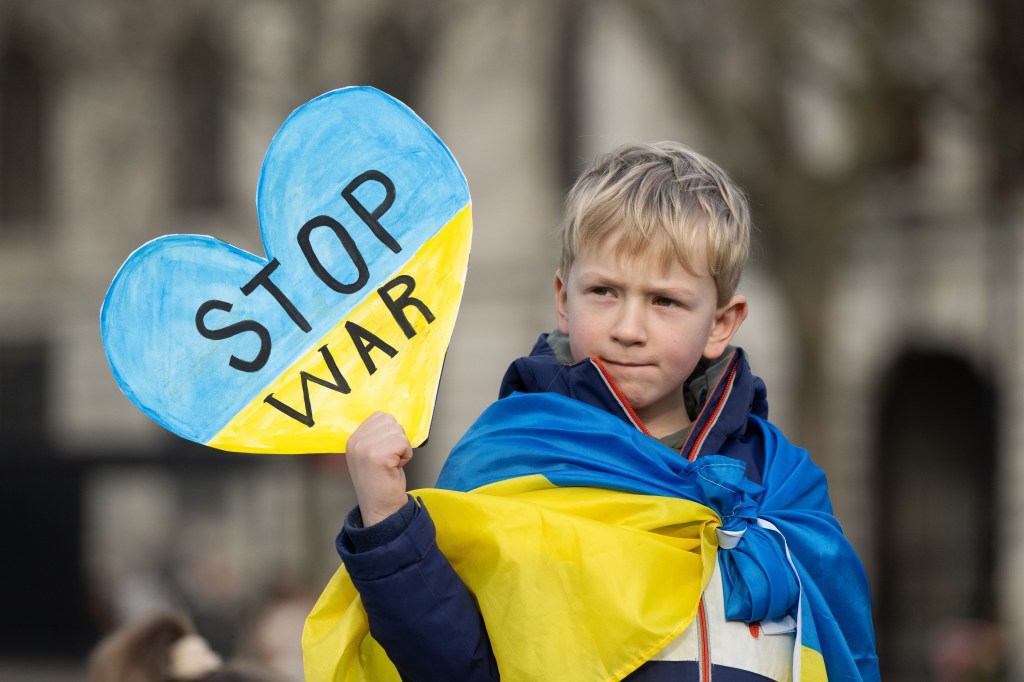
By Zachary Popovich | Rising Expert on Eastern Europe | June 30, 2024 | Photo Credit: Flickr
The recent Ukraine peace summit, held in Switzerland from June 15-16, included participation from approximately 100 countries and represents the country’s most significant diplomatic effort in its 33-year history. Throughout the event, delegates from 80 countries affirmed “principles of sovereignty, independence, and territorial integrity of all states, including Ukraine.” While the forum allowed Ukraine to present clear, actionable terms for ending the war, Kyiv and longstanding partners across the U.S. and European states must do more to engage directly with counterparts throughout Africa, Asia, and the Global South to strengthen international coalitions in opposition to Moscow’s atrocities in Ukraine.
During the summit, Ukraine’s President Zelensky reiterated his 10-point peace plan and provided additional focus on energy and humanitarian security as preconditions for peace with the Russian Federation. These imperatives, included in the event’s final communique and signed by 78 participating states, are outlined in three key points:
1. Ukraine’s nuclear power plants, including the Zaporizhzhia Nuclear Power Plant, must operate under Ukrainian sovereign control and IAEA supervision
2. Global food production and distribution must be defended with “free, full, and safe commercial navigation” restored to the Black and Azov seas
3. All Ukrainian prisoners of war, displaced civilians, and Ukrainian children must be returned to Ukrainian territory
Despite the event’s success in framing future conditions for establishing a responsible, durable peace, it is important to recognize the limited extent of international support it achieved. Notable states absent from the communique’s signatory list include Brazil, India, South Africa, and Saudi Arabia (members of the intergovernmental BRICS group), with Rwanda, Iraq, and Jordan withdrawing their signatures after initially signing. Brazil criticized the Ukrainian and Swiss governments for Russia’s lack of participation altogether. Ukraine must develop new diplomatic and economic engagement strategies to earn international support from developing nations and growing regional players.
Vladimir Putin published his own preliminary peace terms on the eve of the Switzerland summit, demanding Ukraine’s complete withdrawal from four oblasts under partial Russian control. These demands, however, directly contradict Ukraine’s long-held position of regaining all territory, either annexed or temporarily occupied by Russian forces, including the full return of Crimea. According to the International Republican Institute’s February 2024 polling data, a leading plurality of Ukrainian citizens believe Ukraine will regain complete control of all territorial boundaries established in 1991. European Commission President Ursula von der Leyen criticized Putin’s proposal’s lack of sincerity, stating, “He is insisting on disarming Ukraine, leaving it vulnerable to future aggression. No country would ever accept these outrageous terms.”
While reports allege that Russia targeted smaller nations participating in the summit with cyberattacks to minimize global support for Ukraine’s peace proposals, Ukraine and its partners must confront the current failure to include BRICS nations and states across South America, Africa, and Asia within a broader peace coalition.
Simply put, many nations in the Global South do not view supporting Ukraine, or at least supporting Ukrainian peace plans, as important to their national interests. India’s representative, former ambassador to Russia Pavan Kapoor, explained his unwillingness to sign the final communique, stating, “Only those options acceptable to both the parties can lead to abiding peace.”
Ukraine must build upon previous efforts to engage with smaller and developing nations to build a global coalition beyond an existing U.S. and European camp. Ukrainian Foreign Minister Dmytro Kuleba has already conducted three tours across Africa to strengthen support and communicate the global repercussions of Russia’s invasion. Before 2022, Ukrainian grain exports accounted for 10% of the worldwide market, with half of 15 African countries’ grain imports sourced from Ukraine and Russia in 2020. Ukraine’s diplomats must reinforce how Russian impediments to Ukraine’s grain production and export will continue to exacerbate agricultural and economic challenges across Africa. Since Russia’s full-scale invasion, Ukrainian grain exports to Africa have decreased by 68%, contributing to a growing global food security crisis. According to a 2023 report by the UN Food and Agriculture Organization, 23 million more people will be malnourished by 2030 due to Russia’s invasion.
Moving forward, Kyiv’s public and private leaders must work together to engage the developing world by highlighting the impact of Russia’s invasion on their respective economic and political interests, creating new economic and political relationships, and incorporating countries from the Global South into the planning processes for future summits and engagements.
While the June summit failed to establish an official peace roadmap, Ukraine should ensure that future planning working groups are comprised of a broader coalition of states outside the U.S. and Europe—including Egypt, Ethiopia, and other former and new BRICS nations—to address respective strategic considerations and establish a new global consensus affirming Ukraine’s sovereignty and territorial integrity. Additionally, Ukrainian business leaders and associations, including the Ukrainian Chamber of Commerce and Industry, can amplify diplomatic efforts by creating new trade relationships to ensure vital Ukrainian exports can still reach international ports. By establishing new direct export-import relationships, grain and other exports previously purchased and resold by European companies could be purchased at cheaper final price points, stabilize agricultural prices during continued periods of high inflation, and alleviate global food insecurity.
Zachary Popovich is the 2024 Rising Expert on Eastern Europe. He holds a master’s degree in public administration from James Madison University and is fluent in Russian.

 Charged Affairs