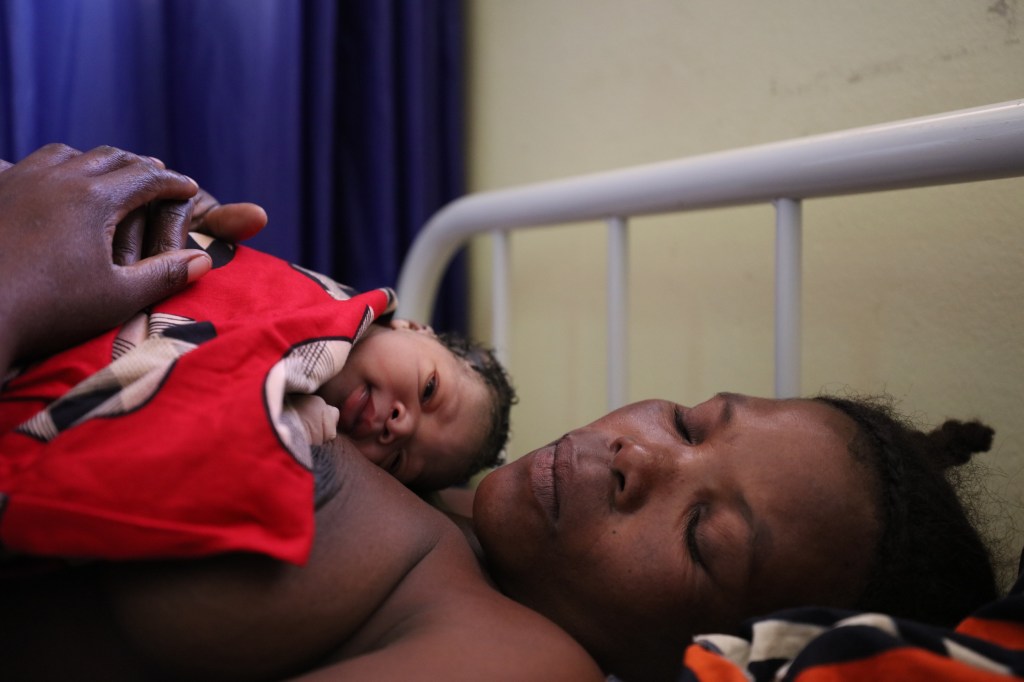
Hanna Dooley | Rising Expert on International Development | September 5, 2024 | Photo Credit: Flickr
The United States is the largest bilateral donor to global family planning assistance, working with UN partners such as the United Nations Population Fund (UNFPA) and the United Nations Children’s Fund (UNICEF) to implement programs that have been proven to critically impact women’s livelihoods around the world. Family planning has been one of the most cost-effective health interventions to achieve many of the sustainable development goals, such as quality education, clean water and sanitation, and zero hunger. Investment in family planning yields a $120 return in economic gains for every $1 invested.
Yet, despite the evidence of the compounding benefits of investing in family planning and reproductive health, the United States’ funding for these areas continues to be inconsistent and insufficient. The politicization of family planning services and the narrative that countries need to cut overall spending has led to volatile funding, from total funding cuts to organizations, to proposed cuts in overall foreign assistance spending. The United States’ history with the UNFPA is one clear example of how the politicization of family planning has caused devastating disruptions to crucial services, undermining the human rights of women and girls. In order to counteract the disruptions and maximize impact, Congress should explore pathways to authorize and appropriate UNFPA consistently in order to champion long-term solutions.
UNFPA’s Impact
UNFPA provides services, training, and supplies in more than 150 countries with the aim of fulfilling unmet needs for family planning, preventing maternal deaths, and stopping gender-based violence. As the “world’s single-largest provider of donated contraceptives to developing countries,” the UNFPA plays a critical role in helping to achieve gender equality, reduce poverty, and accelerate global development. In 2023, UNFPA was able to provide 10.6 million people with sexual and reproductive health services, 2.7 million with family planning services, 956,000 with childbirth facilities, and 4.2 million with gender-based violence prevention, risk mitigation, and response services, among other achievements.
Transformative progress has already taken place: in sub-Saharan Africa, the region with the lowest rate of women of reproductive age using modern contraception (26%), the number of women using modern contraception has almost doubled over the past ten years to 66 million. In 2023, USAID’s Bureau for Humanitarian Assistance contributed $23.4 million to UNFPA to support emergency relief and reproductive health and protective services in Yemen, as the devastating decade-long conflict has left more than 5.5 million women and girls with limited or no access to reproductive health services. UNFPA’s efforts there helped support life-saving services to 2 million individuals across 95 health facilities, 35 safe spaces, eight shelters, and eight specialized mental health centers.
UNFPA’s Funding Volatility
UNFPA is not supported by the UN regular budget; rather, it relies on voluntary contributions from donor governments, the private sector, philanthropy, and intergovernmental organizations. The United States played a leading role in the initial creation of UNFPA in 1969, but the two have since had a rocky relationship plagued by politics and inconsistency.
In 1985, the Reagan administration was concerned about UNFPA’s activities related to China’s coercive family planning practices. The same year, Congress passed the “Kemp-Kasten” amendment which states that no funds can be given to an organization that “supports or participates in the management of a program of coercive abortion or involuntary sterilization,” and gives the President the power to decide whether or not an organization is compliant. Even though several onsite investigations have not found any evidence of UNFPA’s engagement in these activities, the Kemp-Kasten amendment has been invoked to prohibit US funding to UNFPA by every Republican administration since Reagan. Most recently, citing the amendment and UNFPA’s partnership with the China’s National Health and Family Planning Commission, former President Trump withheld funding for UNFPA during his entire presidency. Following party lines, UNFPA funding was restored in 2021 by President Biden.
When Republican presidents determine UNFPA ineligible, the entire core funding for the organization is cut, causing major disruptions in day-to-day operations and in long-term projects. For example, in 2020, because of the lack of funding, UNFPA had to close 75% of its facilities in Yemen, leaving millions of women in need as the humanitarian crisis raged on.
Despite Biden’s support for UNFPA and broader family planning initiatives, the Republican-majority House Appropriations Committee passed its version of the State-Foreign Operations and Related Programs Appropriations Bill in June, which prohibits funds for UNFPA and includes a 24% cut ($147 million) to international family planning initiatives.
These proposed cuts come at a time when humanitarian crises around the world are rapidly increasing the demand for these services. Globally, the need for gender-based violence prevention and response services is skyrocketing in areas where displacement is reaching alarming levels: 7.7 million people need these services in Myanmar, 7.1 million in Yemen, 3 million in Somalia, 7.7 million in the DRC, and 7 million in Afghanistan. Meanwhile, one woman in Yemen and Afghanistan die every two hours due to pregnancy and birth-related complications.
Recommendations to Strengthen US Funding
Investing in family planning is one of the most effective ways to accelerate development progress and is an effective tool for building resilience and overall security for all. In order to maximize its impact, family planning needs long-term, flexible funding, especially in fragile crisis settings.
The Biden administration has taken important steps to restore the United States’ commitment to women’s global health through its reinstatement of funding for UNFPA and its additional investments in maternal health and gender-based violence announced in June. As of 2023, the US is the second highest donor in total contributions, but only the seventh highest for core contributions due to its core funding remaining level for the 14th consecutive year. Rather than being tied to thematic or issue-based initiatives, as the majority of the US’ total funding is, core funding allows UNFPA to be more agile and able to respond to humanitarian crises in real time. Core funding also enables long-term projects to be implemented that can test new innovations, which reduce costs and transfer ownership of initiatives to local communities.
The US should increase their core contribution given the compounding benefits family planning has across several development goals. However, the first step for Biden should be to champion longer-term funding solutions, working with Congress to make sure that progress is not undermined by cuts, either through a new administration or Congress. To do so, Congress should authorize US contributions to important partners such as UNFPA for multiple years rather than one year at a time. It should take up legislation that removes or amends the Kemp-Kasten amendment to avoid complete cuts and rather target cuts specifically to countries or activities if they are found, with evidence, to be of concern.
In 2023, UNFPA humanitarian programs were only funded at 50%, leading the organization to appeal for greater funding in 2024, which has the potential to reach 48 million women, girls, and young people. The transformative impacts on security and prosperity are too important for family planning to be trapped in the US political pendulum. By making family planning funding more consistent and reliable, the US can accelerate its contributions to achieving the SDGs and provide critical care for millions of women and girls.
Hanna Dooley is the YPFP’s 2024 Rising Expert on International Development. She currently conducts research on a range of topics related to international trade, fragility, human development, and energy transitions, and is a member of the Foreign Policy for America’s NextGen Initiative. She earned her BA in Economics and Political Science from Arizona State University.

 Charged Affairs