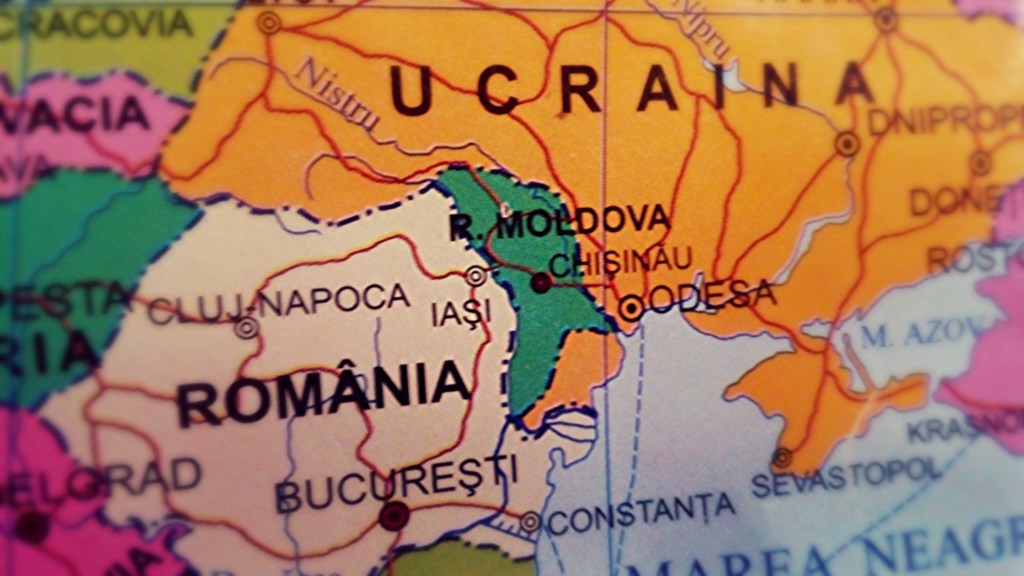
Zachary Popovich | Rising Expert on Eastern Europe | October 19, 2024 | Photo Credit: Flickr
On June 25, the European Union (EU) agreed to open accession negotiations with Moldova after conferring it as a candidate for accession in June 2022. Moldova’s continued progress in integrating with the EU and other institutions will depend on this month’s Presidential election and EU referendum. Since her election in 2020, Moldova’s President Maia Sandu and her pro-EU Party of Action and Solidarity (PAS) have increased national momentum toward a Eurocentric future by making anti-corruption, economic liberalization, and rule-of-law central political objectives. While these actions may signal the current administration’s intentions, Moldova must address its existential political, institutional, and security vulnerabilities to build a majority national coalition to support joining the EU and other European international organizations.
Russia’s invasion of Ukraine in 2022 precipitated a significant shift in the expansion strategies of the EU and aspiring EU nations. This event prompted a reevaluation of how the union should expand its membership while upholding its internal standards. Until now, Moldova, like Ukraine, had been collaborating with the EU on specific trade, security, and travel agreements. However, Russia’s direct military intervention in Ukraine brought to light Moldova’s persistent security challenges. This instigated the impetus to confront the economic, political, and institutional barriers to EU membership.
Moldova’s ongoing security issues are not anything new. Moldova’s most significant obstacle to integration with the EU and the North Atlantic Treaty Organization (NATO) is the Russian-backed breakaway region of Transnistria. Since the Soviet Union’s dissolution in late 1991, separatists in Transnistria, a region where Russians comprise an ethnic plurality but not a majority, have claimed independence. After a war with Moldovan forces in 1992, Russia intervened under the guise of peacekeeping operations and has since stationed its 14th Army in Transnistria. For the past three decades, Russia has used its military presence and Transnistria’s dependence on Russian energy supplies as leverage to dissuade Moldova from taking serious steps toward integrating with European institutions.
Transnistria’s reintegration and Moldova’s political and economic sovereignty will be determined mainly by Ukraine’s territorial defense and Moldova’s ability to build upon new policies to integrate its financial and energy systems with European markets.
Until 2023, almost all Moldovan natural gas imports were sourced from Russian firms like Gazprom. In May 2023, however, Moldovan Prime Minister Dorin Recean announced that “Moldova no longer consumes Russian gas, and it is integrated into the European energy network both technically and commercially,” with only Transnistria still receiving subsidized Russian gas. Despite Moldova’s recent agreement with Ukraine to continue Russian gas flows to Transnistria through the end of 2025, such an arrangement will unlikely continue beyond the EU’s targeted ban on Russian fuel imports by 2027. The decision to pivot imports from east to west and procure orders from European providers is critical in securing Moldova’s economic and energy independence and decreasing Russia’s influence over its political decision-making.
Russia’s potential inability or unwillingness to provide subsidized gas to Transnistria would strengthen Moldova’s negotiating position in potential reintegration discussions. Similarly, Russia’s failure to achieve its territorial aspirations in Ukraine would also diminish Russia’s ability to support its forces stationed in the region and reduce its leverage over Transnistria and Moldova. Russia has already shown its inability to project military and diplomatic power over other conflicts in which it previously had significant influence. Russia’s inability to prevent Azerbaijan’s 2023 annexation of the ethnically Armenian Nagorno-Karabakh region was a consequence of its military failures in Ukraine and evidence that it is unable to direct resources and political capital away from its costly operations in south and east Ukraine.
While energy and economic independence are crucial for achieving greater European integration, these policies must be underpinned by other reforms aimed at overhauling Moldova’s Soviet-style institutional and administrative structures and tackling corruption as an existential political challenge.
President Sandu’s administration has already made considerable progress in tackling corruption and establishing new public transparency and accountability mechanisms. Moldova adopted legislation to improve public sector transparency and adopted a 2024-2028 national integrity and anti-corruption program. While working to boost the independence of the judiciary, Moldova also strengthened the vetting process for judges to enhance the judiciary’s integrity. New procedures mandated background checks on personal and family finances to detect illicit wealth and its sources. Additionally, the Sandu administration also created an asset recovery program for seizing assets related to organized crime and invested in the Anti-Corruption Prosecutor’s Office and National Anti-Corruption Center, which improved their collaboration with law enforcement agencies.
Moldova must ensure its public institutions and administrative leaders can maintain momentum in addressing corruption and build multipartisan coalitions to expand public support. According to former Minister of Justice Stanislav Pavlovschi, Moldova’s corruption issues require more than administrative or organizational remedies and societal support to increase the political will to hold corrupt officials accountable across party lines.
Moldova has significantly progressed toward greater integration with European political and economic systems. This transition toward the EU will minimize Russia’s influence on Moldova’s political processes and help it regain control over its territory and vulnerable energy sector. These obstacles will require further public reforms along with the continued support of its citizenry. With continued dedication and political determination, Moldova can achieve its European democratic destiny.
Zachary Popovich is the 2024 Rising Expert on Eastern Europe. He holds a master’s degree in public administration from James Madison University and is fluent in Russian.
 Charged Affairs