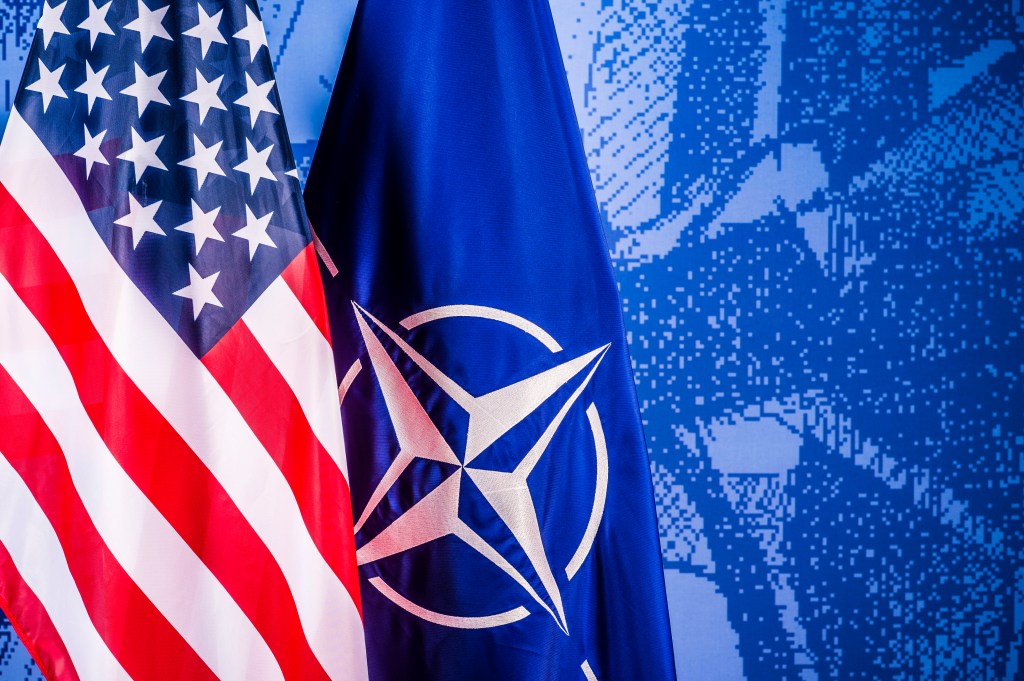
Mick Methorst | YPFP Member | March 18, 2025 | Photo Credit: Flickr
Since President Donald Trump’s inauguration in January 2025, Europe faces renewed uncertainty about its security relationship with the United States. Trump’s transactional approach, demonstrated by his demands that NATO allies drastically increase defense spending to 5% of GDP and his controversial suspension of military aid and intelligence sharing to Ukraine, has shaken Europe’s faith in America’s security guarantees.
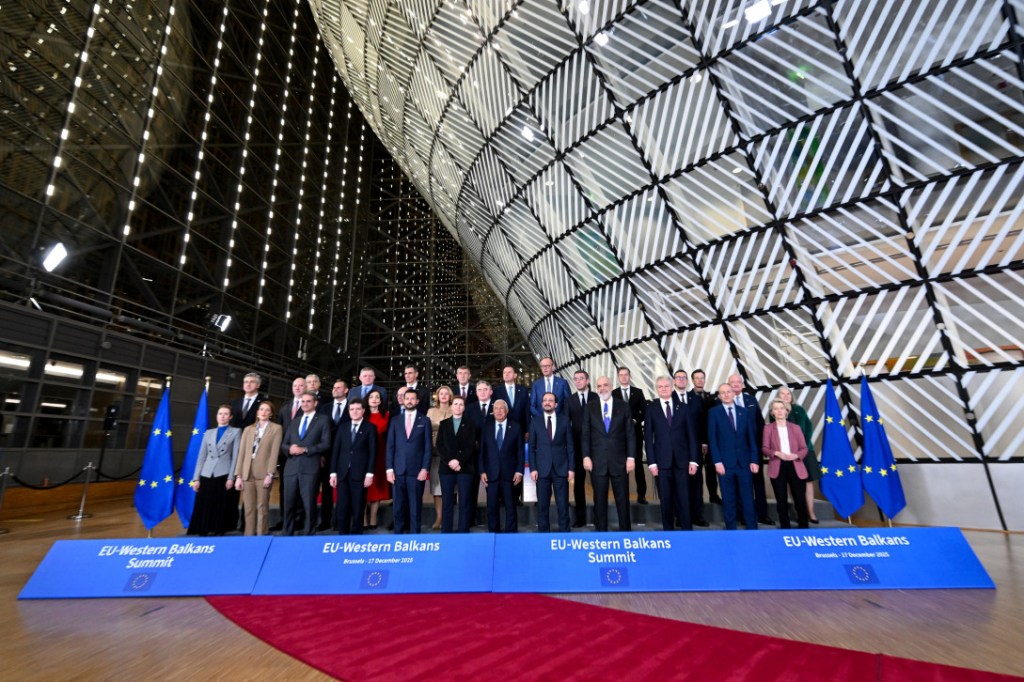
Trump’s insistence that NATO allies spend up to 5% of their GDP on defense has been met with widespread skepticism and resistance among European leaders. Italy’s defense minister described the proposal explicitly as “unrealistic,” echoing broader European concerns over America’s diminishing reliability. Moreover, Trump’s halt of crucial military support for Ukraine represents a significant shift from Biden’s previous support, leaving Europe feeling vulnerable and prompting urgent policy reassessments across the continent. In response, the European Union has rapidly accelerated its own defense initiatives. At a recent emergency summit, EU leaders approved an ambitious defense investment plan aiming to mobilize approximately €800 billion to enhance Europe’s military autonomy. This landmark decision underscores Europe’s commitment to self-reliance amid American retrenchment.
These developments align closely with realist theory in international relations, particularly offensive and defensive realist perspectives. Trump’s policies epitomize offensive realism, emphasizing states’ fundamental drive to “maximize their relative power as the surest way to survival”, viewing alliances strictly through a transactional lens and prioritizing national interests even at allies’ expense. In contrast, Europe’s response illustrates defensive realism, prioritizing “security through deterrence and careful strategic balancing rather than aggressive expansion or confrontation”.
The contrast between Trump’s approach and former President Biden’s policies is stark. Biden reaffirmed traditional alliances, treating NATO as fundamental to U.S. and global security. Under Biden, Europe and the U.S. collaborated closely to counter Russia’s invasion of Ukraine, reinforcing mutual trust and unity. Trump’s recent withdrawal of aid to Ukraine and his ambivalence about NATO commitments signal a return to isolationist, offensive realist principles, compelling Europe to reconsider its dependency on Washington.
This strategic recalibration has significant implications. Europe’s push toward defense autonomy could either solidify NATO by balancing American contributions or fragment the alliance if mistrust persists. While Trump’s pressure may succeed in driving Europe to invest more robustly in defense, it simultaneously risks weakening “the transatlantic partnership that has underpinned Western security for decades”.
Ultimately, Europe’s response—stepping forward with increased defense investments and advocating greater strategic autonomy—highlights a defensive realist approach: securing enough capability to ensure safety, but without seeking confrontation. This careful balancing act, prompted by Trump’s transactional security approach, positions Europe to emerge as a stronger, albeit more independent, geopolitical actor.
The long-term implications of Trump’s NATO stance extend beyond immediate budgetary and political considerations. If Europe accelerates its strategic autonomy, this could fundamentally rebalance global security alliances. A reduced U.S. military presence in Europe might encourage NATO members to pursue new multilateral security frameworks, enhancing EU influence but potentially exposing NATO fractures. Adversaries such as Russia and China could exploit such fractures to test alliance cohesion. Furthermore, European states may explore alternative security arrangements, potentially increasing Franco-German cooperation or stronger alignment with other global powers like Japan and India. Trump’s policies, paradoxically, prompt Europe to define its global security role independently from Washington, fundamentally reshaping the future geopolitical landscape.
Mick Methorst is a political science student at Vrije Universiteit Amsterdam, specializing in international relations, diplomacy, and European security. He is a student assistant at VU Amsterdam.

 Charged Affairs