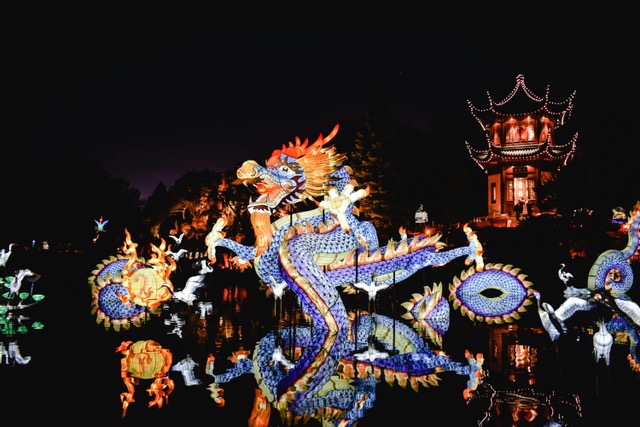
Nicholas Barnes | YPFP Member | May 6, 2025 | Photo Credit: Flickr
The art market sits at the intersection of wealth, secrecy, and international power, yet it has remained absent from strategic conversations. In 2020, the U.S. Senate’s Permanent Subcommittee on Investigations published a report revealing how sanctioned Russian oligarchs funneled more than $18 million through American auction houses. The revelation prompted little response, yet the implications are far-reaching. Art remains one of the least regulated financial assets, a medium through which adversarial states and sanctioned individuals can move capital and cultivate symbolic influence. Most Western responses have sought to close this channel. But a deeper strategic question remains unasked: What do we lose when we cut cultural access completely?
China offers a contrasting example to the Western approach. Over the past decade, it has not only become a major player in the global art market but has made that market part of a broader strategy. Poly Auction, owned by the China Poly Group, an arm of the state’s defense-industrial complex, serves dual purposes – it generates profit and prestige while operating as a vector for state-backed influence and narrative control. China is not simply buying influence, it is shaping the rules under which cultural value is assigned. By constructing a sovereign market, opaque by design and resistant to Western pressure, China is asserting a new center of gravity.
The Western response has emphasized regulation. In 2022, the U.S. Treasury’s Financial Crimes Enforcement Network (FinCEN) published a study on the risks of illicit finance in the art industry. This study confirmed the vulnerabilities but stopped short of imposing enforceable requirements. Due diligence remains voluntary, according to the U.S. Treasury’s public statement on the study. As a result, sanctioned actors can still move through shell companies and intermediaries. Meanwhile, platforms like Poly operate in jurisdictions where state protection blunts any chance of transparency.
The reflexive solution is to seal off the Western market, to prohibit transactions with buyers and sellers linked to sanctioned regimes. But this response may do more harm than good. Isolation accelerates the creation of closed-loop systems, where countries like China and Russia trade, value, and circulate their own cultural capital entirely outside the Western sphere.
Strategic access to cultural markets offers benefits beyond enforcement. The ability to trace buyers, observe their preferences, and analyze symbolic investments yields intelligence. Selling to sanctioned buyers under controlled conditions is not appeasement but a calculated move to retain jurisdiction and intelligence advantage. During the Cold War, the United States permitted cultural exchange with the Soviet Union precisely because it created channels of visibility and influence. The same logic applies now.
When the West cuts adversaries out of its art markets, it does not just lose oversight. It weakens the institutions that once defined the terms of legitimacy. As major works migrate into systems built by authoritarian states, the mechanisms for valuation, authentication, and prestige begin to shift with them. Western norms no longer anchor the market. They become optional. Over time, this erodes the legal and financial architecture that underpins not just cultural credibility but economic influence. The longer these systems operate outside Western jurisdiction, the harder it becomes to reassert authority.
If broader restrictions remain, the United States should preserve at least one point of controlled access by reopening pathways to international freeports. These facilities, located in neutral jurisdictions, already serve as global hubs for high-value art and asset storage. Denying access does not stop the trade. It drives it deeper into opaque systems controlled by adversaries. The United States should allow regulated use of these freeports by American institutions and intermediaries, creating a legal structure through which assets can be tracked, leveraged, or frozen if necessary. This maintains a degree of strategic control in a domain where complete exclusion guarantees irrelevance.
China already treats cultural capital as a strategic asset in global competition. If the West retreats, it does not just lose access, but also forfeits the ability to shape the system. Selling on our terms preserves jurisdiction, influence, and the power to define value. That is the path of strategic clarity.
Nicholas Dillon Barnes served as Head of Business Development at SPY Projects Art Gallery in Los Angeles. He has an interest in intelligence and global markets.
 Charged Affairs