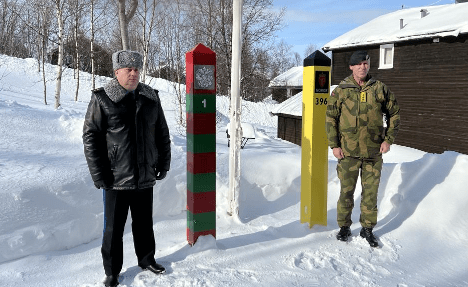
Allie Virginski | YPFP Member | May 9, 2025 | Photo Credit: Runar S. Røssevold
Since the outbreak of the Russo-Ukrainian war in 2022, tensions between Russia and NATO have escalated, including in the Arctic where Russia shares a border with Finland and Norway. This conflict has directly impacted Arctic security, as Russia’s military presence and actions in Ukraine have led to greater Arctic militarization, turning what was once a space for cross-border cooperation and trade into a shadow battleground. This type of hybrid warfare threatens not only the geopolitical stability of the region, but also the lives and lands of the Indigenous communities residing there. Such a shift necessitates a stronger partnership between NATO and Arctic Indigenous groups, such as the Inari Sámi, to help bridge the gap between military and cultural sovereignty.
The origins of the Inari Sámi, semi-nomadic reindeer herders, date back nearly 10,000 years ago, to the last Ice Age. The Sámi traditions reflect thousands of years of knowledge about adapting to the Arctic’s difficult terrain and subzero climate. This knowledge has made them one of the oldest Indigenous populations in Europe, and their presence across what is now known as Finland, Norway, Sweden, and Russia predates the establishment of modern borders and the concept of sovereign nation-states. Today, the Sámi find themselves at the crossroads of the East and the West.
Russo-Ukrainian War and Divisions Within the Sámi Community
Nearly 20,000 Sámi live in Russia, where they face political repression, internet blockades, and international sanctions. Due to pervasive Russian propaganda and lingering mistrust of NATO countries—rooted in 19th century assimilation policies that severely restricted Sámi freedoms—many Sámi initially defended Russia’s invasion of Ukraine. Nevertheless, more than two years into the war, Sámi communities have had their land ravished and expropriated for critical mineral and energy mining projects. Past attempts by international organizations to reach the Sámi have fallen short—the Russian ministry of justice has now placed these groups on a terrorist and extremist list, allowing them to take legal action against Indigenous rights activists. Russia has also begun a formal Indigenous registration system, forcing many Sámi to go into hiding and others to flee to neighboring NATO countries in search of protection in the form of asylum. Now more than ever before the Sami are in need of an international forum to safeguard their rights.
New Opportunities for NATO Engagement with Indigenous Communities
The Russo-Ukrainian war presents a unique opportunity for NATO to formalize cooperation with Indigenous communities through the establishment of an Arctic Partnership Forum (APF). The APF would enable deeper cultural exchanges and mutual understanding amongst NATO forces gathering military intelligence in the Arctic and Indigenous communities residing there. In contrast to the recently suspended Arctic Council, which has been hindered by political deadlock, the APF could provide an innovative and proactive framework that directly engages Indigenous communities—who have been historically underrepresented in high-level international forums—while also addressing pressing issues like security, climate change, and economic development.
In a region as vulnerable as the Arctic, collaboration is essential. Securitization of the Arctic, driven by geopolitical tensions in the shadow of the Russo-Ukrainian war, should not undermine the rights and sovereignty of Indigenous Peoples. NATO offers an opportunity to develop a new model for Arctic governance—one that respects Indigenous culture and society while addressing critical security needs. By fostering partnerships with Indigenous communities like the Sámi through the APF, NATO can create an international legal framework that integrates Indigenous knowledge and values, balancing immediate regional security needs with safeguarding Indigenous traditions. NATO’s adoption of a legal instrument with the Sámi would lay the groundwork for future collaboration, ensuring Indigenous voices are reflected in foreign policy.
Alexandria Virginski is an immigration attorney, specializing in employment-based visas. She earned her Juris Doctor from the University of Wisconsin with a concentration in international and comparative law, and holds dual Bachelor of Arts degrees in international relations and Spanish from Michigan State University.

 Charged Affairs