By Nils Peterson | Rising Expert on Indo-Pacific | June 25, 2025 | Photo Credit: Flickr
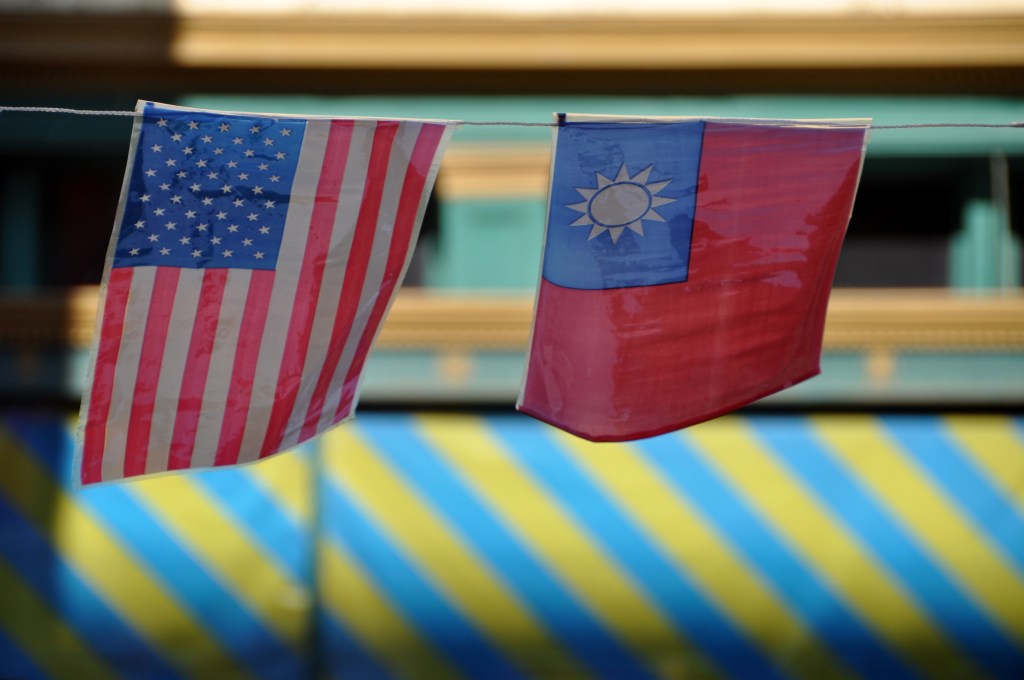
The Republic of China (Taiwan) faces ongoing domestic political battles over the governmental budget, including national defense spending. This infighting affects the United States’ interest in strengthening Taiwan militarily and politically against subversive activity by the Chinese Communist Party (CCP). To incentivize a bipartisan increase in Taiwanese defense spending, the United States should offer a discount to the ROC on arms purchases for the rest of 2025.
Republic of China (ROC) President Lai Ching-te assumed office on 20 May 2024. It was a watershed moment in Taiwanese politics because it marked the first time in the democratic history of the ROC that a political party, in this case the Democratic Progressive Party (DPP), would have a third consecutive term controlling the executive branch. However, the Lai administration faces one significant challenge compared to the previous Tsai Ing-wen administration (2016-2024): it lacks a majority in the Legislative Yuan (LY), the unicameral legislative branch. This has resulted in gridlock between the legislative and executive branches throughout the first year of Lai’s four-year term.
The most notable outcome of this gridlock has been ongoing political fights and constitutional crises that have led to the longest budget freezes and deepest cuts in ROC history. The Kuomintang (KMT) and Taiwan People’s Party (TPP), which together control the LY, pushed the current budget through the legislature in the first three months of 2025. The most concerning aspect of this budget is the NT$98.3 billion (US$3.05 billion) hold on defense spending. The current defense spending freeze is especially worrying as the cross-strait security situation continues to deteriorate due to the People’s Liberation Army (PLA) Air Force violating the ROC air defense identification zone with hundreds of military aircraft per month. Though ongoing special budgetary procedures could reverse portions of this budget freeze, and KMT Chairman Eric Chu has made clear that the party does not wish to harm ROC national security, no compromise has yet been reached.
This political and budgetary fighting has also led to recall campaigns against members of the LY. These campaigns, which have targeted over 30 KMT legislators since January, were initiated by DPP-aligned civil society groups in an attempt to flip the LY to DPP control. In turn, KMT counter-campaign civil society groups have targeted 15 DPP legislators with recalls. Escalating recall campaigns could degrade Taiwanese public trust in their government by portraying a legislature more focused on internal power struggles than serving the people. This outcome would hinder Taiwan’s whole-of-society effort to resist CCP political warfare, which frames democracy on the island as ineffective and chaotic.
The political infighting affects the United States’ interest in helping strengthen Taiwan militarily and politically against subversive activity by the CCP. The United States should offer apolitical incentives that encourage Taiwan’s political parties to commit to their consensus of increasing defense spending. It is key that these incentives do not play only to KMT or DPP bases in order to avoid the perception that the United States is interfering in domestic Taiwanese politics, a favorite charge of CCP propaganda organs.
One fitting policy option for the United States is to offer a discount to the ROC on arms purchases for the rest of 2025. This policy will only be effective if the United States government and defense contractors deliver the weapons that the ROC purchases on time, rather than continue the status quo of delayed deliveries. This approach would strengthen the ROC military and incentivize the ROC political leadership to reach a budgetary agreement or risk domestic constituencies viewing them as incompetent in the face of PLA aggression. The latter would become a clear political liability for whatever party the Taiwanese voters associate with national defense incompetence. This policy will also aid in rebuilding the United States’ defense industrial base while simultaneously strengthening a key partner in line with Secretary Hegseth’s vision for increasing American deterrence in the Indo-Pacific.
The domestic political confrontations facing Taiwan can only be solved by the people and politicians of the island. Nevertheless, the United States can incentivize a positive outcome both for the ROC government and American interests via a light-handed economic carrot. In the face of a worsening security situation in the Indo-Pacific, it is in the interests of both Taiwan and the United States to have a well-functioning ROC government that continues the trend of the Tsai administration in increasing defense spending.
Nils Peterson is currently studying for an MA in Taiwan Studies on a Marshall Scholarship at the School of Oriental and African Studies. He previously led the China Team at the Institute for the Study of War as a War Studies Fellow. He is the Rising Expert for Indo-Pacific at Young Professionals for Foreign Policy.

 Charged Affairs