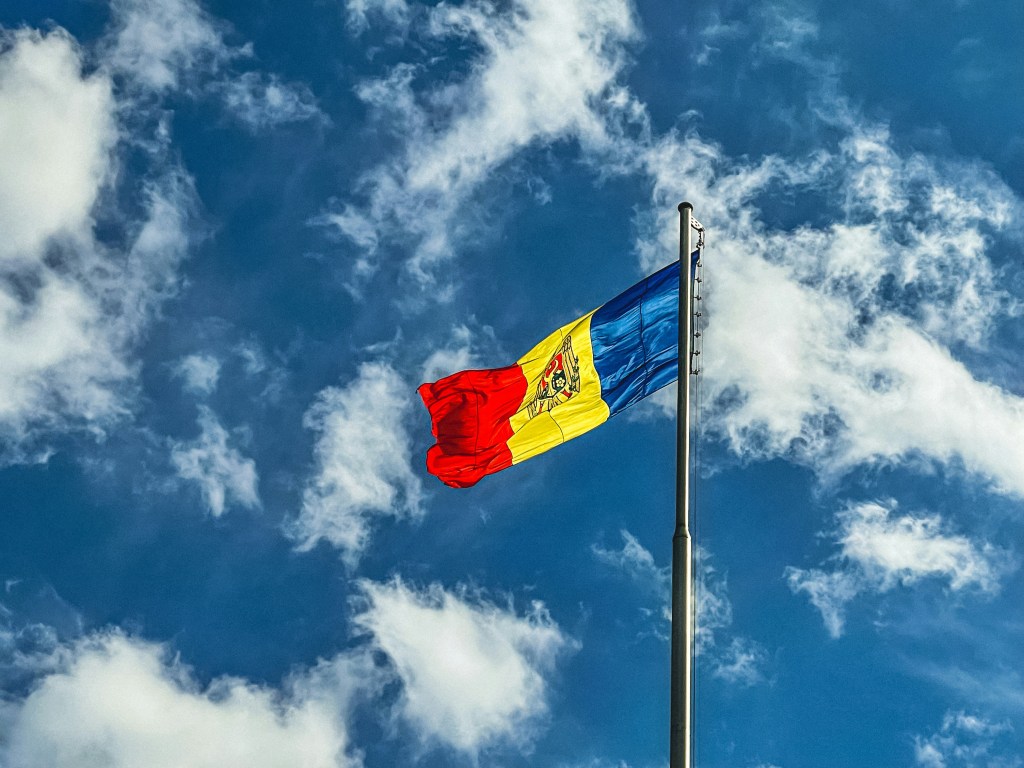
By Antonia Laura-Pup | Rising Expert on Eastern Europe | September 16, 2025 | Photo Credit: Unsplash
High Stakes in Moldova’s September Elections
On September 28, Moldova will hold parliamentary elections. At stake is the country’s European integration, with the presidential liberal party PAS struggling to secure a narrow victory over the two pro-Russian blocs, the Bloc of Communists and Socialists and Alternativa. While the first of these two blocs is openly pro-Russia, the second one, formed of politicians close to the Kremlin, has rebranded as pro-European. With malign interference in full bloom, forming a parliamentary majority to support the EU’s accession requirements will likely to be very difficult after the elections.
After Maia Sandu secured a second presidential term in last fall’s elections and the EU membership referendum passed with a razor-thin margin, Russia is again attempting to derail Moldova’s pro-Western path. As formal EU accession negotiations started in June 2024, Moldova now needs a stable government to implement the membership requirements. To the detriment of this cause, the Russians are mobilizing influence operations amplified by bots on social media, illicit funds, and cyber attacks.
Russia’s Hybrid Playbook
During the 2024 presidential elections, Moldovan institutions were prime targets for Russian-sponsored cyber operations. Electoral infrastructure was massively targeted through DDoS attacks, and the presidential institution’s website was compromised. The Moldovan Parliament was also impacted by several phishing attacks. On social media, a network of 160 Telegram channels, TikTok accounts, Facebook groups, and Vkontakte bots for automated comment writing was activated to spread pro-Russian disinformation narratives.
Furthermore, an investigation from the independent media outlet Ziarul de Gardă showed how Moldovan citizens were bribed to oppose EU accession during the country’s referendum. The network that organized this bribery was likely coordinated by the Russian intelligence agency FSB, according to a report by the Moldovan intelligence agency SIS.. The Moldovan law enforcement authorities reported that Russia has invested more than €13 million to buy votes against the reelection of Maia Sandu and against the EU membership referendum in 2024.
Russia’s playbook ahead of the 2025 parliamentary elections is just as sophisticated. According to the Moldovan prime minister, it includes pro-Kremlin influencers paid with cryptocurrency. They are coordinated to spread disinformation narratives related to the government’s work, the country’s economic situation, and the war in Ukraine. A report of the Ukrainian Foreign Intelligence Service SZRU shows that the Kremlin’s Matrioshka network of bots is flooding social networks with fake videos created to imitate the productions of well-known media outlets, with the aim of confusing the population.
The Matrioshka network was also documented by the French government last year, as it targeted French-speaking citizens with fake content that impersonates North American and European public figures and outlets with the goal of spreading anti-Ukrainian narratives. According to the French secretariat for defense and national security, this network targeted France’s pro-Ukraine activists, French politicians, and the Paris 2024 Olympic Games.
Russia’s destabilization efforts in Moldova ahead of these consequential elections are not limited to the digital space. Russia is also organizing military exercises to intimidate the population in the contested Transnistria. Moreover, in June near Tiraspol, the Russians simulated the Iași-Chișinău operation from 1944 that led to Romania’s invasion. More than a historical commemoration, this operation was meant to signal the Kremlin’s interest in destabilizing the region.
In addition to signaling its military superiority, Russia is also trying to challenge the Moldovan authorities through infiltration. In June, there was an attempt to physically infiltrate in Moldova 195 sportsmen who were to participate in an unauthorized kickboxing “championship”. In fact, these sportsmen were persons affiliated with Russian military institutions.
Chișinău’s Policy Response
The government in Chișinău updated its national legislation to tackle the Russian operations targeting the integrity of the electoral process. As of this year, candidates will not be allowed to make political propaganda using images of foreign authorities or officials. Ceilings for donations to political parties were lowered, foreign sources of funding were banned, and cash contributions were severely restricted. Tightening institutional oversight of political financing is a positive development taken by the pro-European government in response to the Kremlin’s systematic efforts to buy the vote in last year’s elections.
Maia Sandu has spoken repeatedly, both at home and abroad, about the high risk of foreign interference in the upcoming elections. Sandu highlighted the Kremlin’s willingness to get involved in installing a pro-Russian government that would reverse Moldova’s European course and destabilize the region. She even drew attention to the involvement of Orthodox priests in these Russian-sponsored influence operations, pledging that all those who receive orders from foreign actors to affect the integrity of the vote will be sanctioned.
But the changes in national policies are hardly enough to protect Moldova from Russia’s hybrid toolbox. With a vulnerable economy and too few experts able to stand up to Russian destabilization efforts, Moldova needs the support of like-minded partners to secure its parliamentary elections from malign interference.
The EU Steps Up as U.S. Steps Back
The European Union stepped up to boost the resilience of the authorities in Chișinău by including Moldova in its new EU’s cybersecurity reserve. This initiative will involve the deployment of cyber experts from both public and private institutions in Moldova to help fight cyber attacks.
Furthermore, the Council of the European Union decided to extend the mandate of the civilian mission in Chișinău by two years, with the goal of strengthening the resilience of the country’s security sector in the field of crisis management and hybrid threats. The staffing of this EU civilian mission will increase by 30% and its budget will be raised by almost €20 million. Earlier this month, a national hybrid threat simulation exercise was organized under the EU umbrella. Google, Meta, and TikTok representatives took part together with Moldovan authorities for preparing the upcoming electoral round. The EU is also preparing to launch a regional observatory for digital media that will act as an early-warning mechanism for Russian disinformation campaigns.
Support for Moldova has also come bilaterally, through intelligence sharing, capacity building, and cyber defense funds. Romania, as the host nation of the European Cybersecurity Competence Centre and Network, contributes to Moldova’s institutional readiness in the cyber domain. The authorities in Bucharest have also banned the mayor of Chișinău and leader of the Alternativa bloc, Ion Ceban, from entering Romania and the Schengen area, citing national security reasons.
Ukrainian intelligence agencies revealed that the campaign to torpedo Moldova’s European integration and install a pro-Russian government after the elections is coordinated from Moscow by Serghei Kirienko, first deputy head of the Russian presidential administration. The United Kingdom recently pledged to invest £1.1 million for strengthening Chișinău’s cyber defenses. Denmark earmarked €7 million for military training and combating cyber threats, in conjunction with the start of the Danish Defense Agency’s activities in Moldova this fall.
Despite the activism of some European states, with USAID funding still suspended by the Trump administration, Moldova is left with many unfinished cyber-related projects. In 2024, USAID and the State Department pledged additional funds to further strengthen Moldova’s logistical and cybersecurity capabilities and even donated IT&C equipment to the Technical University of Moldova that would be used to train the workforce. Another key project, aimed at protecting Moldova’s critical infrastructure, was also halted.
This security deficit in the information space is compounded by a new economic challenge that came with President Trump’s recent announcement to impose tariffs of 25% on Moldovan products exported to the U.S. market. Moldova’s economic position is as weak as it can be: the poorest country in Europe. These tariffs will severely impact the competitiveness of Moldovan products exported on the U.S. market. In 2024 alone, the value of Moldovan exports to the U.S. amounted to $90,225, mostly consisting of wines and juices.
Building Moldova’s Cyber-resilience from September Onwards
Ahead of the September parliamentary elections, Moldova stands at a critical juncture facing Russian hybrid warfare designed to derail its European integration. While the EU and bilateral partners have stepped up with defensive measures, the current support framework remains insufficient against the scale and sophistication of Russian interference operations. These operations are executed on a fertile ground, as Moldova faces a tough economic situation, and the PAS-led government has seen a decline in support while in power. The suspension of USAID funding created gaps in Moldova’s cybersecurity support system, leaving critical projects incomplete. To truly secure its infrastructure and democratic processes, Moldova requires not just the restoration of USAID cybersecurity funding, but also support in developing indigenous cyber offensive capabilities. Just as Estonia developed a robust cyber defense doctrine following the 2007 attacks, Moldova needs the capacity to disrupt influence operations at their source.
Antonia-Laura Pup is a Fulbright Student in Security Studies at Georgetown University, where she is researching China’s influence in the Black Sea region. Originally from Romania, she formerly advised the Chairman of the Defence Committee in the Romanian Parliament. She also formerly worked at the OECD and European Parliament.

 Charged Affairs