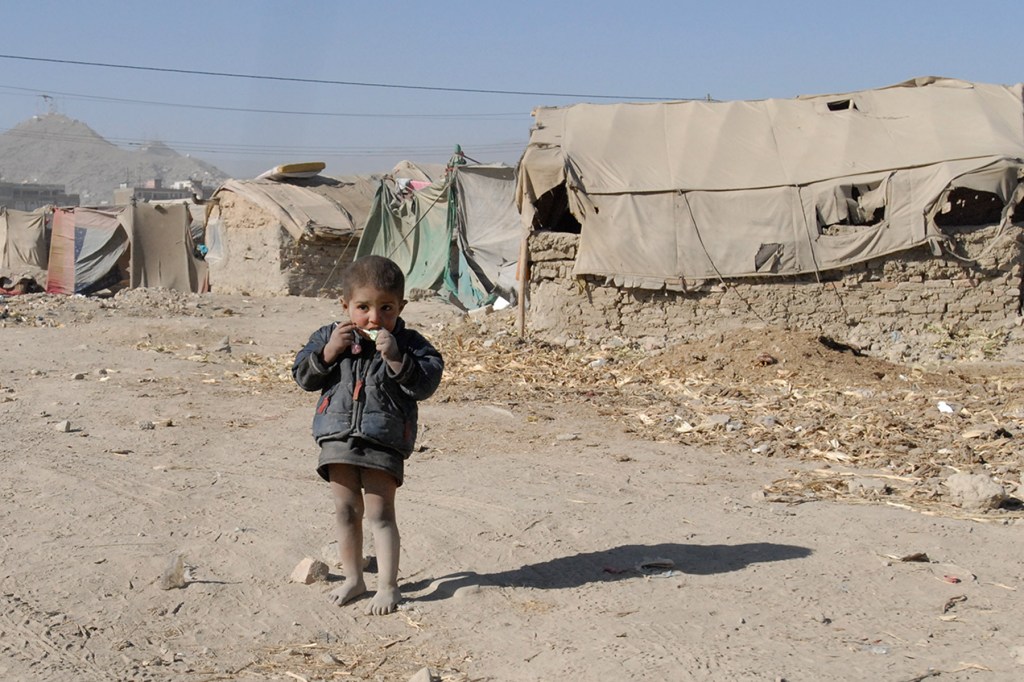
By Diana Roy | Rising Expert on Migration | September 24, 2025 | Photo Credit: Flickr
In early May, 59 Afrikaner “refugees” arrived in the United States, garnering national and international scrutiny. Far from a routine resettlement, their rapid admission reveals insights into the second Trump administration’s immigration priorities. The White House said that South African domestic policy, such as land confiscation efforts, fuels violence and racial discrimination against white farmers and landowners. The country’s president called these claims unfounded, in alignment with international human rights observers.
The Afrikaners’ arrival came four months after a January executive order that suspended the decades-old US Refugee Admissions Program (USRAP) for 90 days. Although a federal court ordered the program’s resumption in February, the administration warned that refugee resettlement services may remain slow for months. Before the Trump administration’s policy changes, the average processing time for most refugees was between 18 and 24 months. Framed as a national security matter, the swift admission of Afrikaners marks a stark departure from the United States’ long-standing role as a haven for the persecuted.
For nearly 50 years, USRAP has enabled Washington to provide refuge to the world’s most vulnerable people. Now, the selective resettlement of Afrikaner refugees who do not meet the traditional threshold of immediate humanitarian crisis reveals a politicized shift in U.S. refugee policy. By prioritizing their resettlement while US refugee admissions from conflict zones, including Ukraine, remain frozen—and as protections like temporary protected status for Afghan refugees expire—the Trump administration is breaking with decades of bipartisan refugee policy and undermining Washington’s role as a global humanitarian leader.
***
The evolution of US refugee policy traces back decades. In 1948, US President Harry Truman signed into law the Displaced Persons Act, the first major legislation that explicitly focused on the plight of refugees. The act sought to resettle—rather than repatriate—Europeans displaced amid World War II and allow them to enter the United States. Although the act resettled more than 350,000 Europeans, it utilized the framework of the Immigration Act of 1924. This restrictive legislation introduced a nationality-based quota system that disproportionately favored immigrants from Northern and Western Europe. Groundbreaking at the time, the Displaced Persons Act was nonetheless a temporary measure that revealed the need for a more flexible and systematic approach to resettlement.
Following the act’s expiration in 1952, U.S. refugee policy continued to evolve. The Immigration and Nationality Act of 1952 maintained the nationality-based quota system but provided the Attorney General discretion to offer parole to refugees under certain conditions. A decade later, Congress passed the Migration and Refugee Assistance Act of 1962 to demonstrate the United States’ commitment to human rights during the Cold War. The law authorized humanitarian and financial assistance to refugees, particularly those fleeing communist regimes. However, while the law bolstered Washington’s credibility as a reliable humanitarian actor, it still did not establish a systematized approach to refugee admissions.
These institutional shortcomings motivated the Refugee Act of 1980, which transformed US refugee policy and created the admissions system that exists today. As part of the act, Congress created USRAP, the primary legal pathway for refugees to resettle in the United States. The program established a formal framework for admitting and resettling refugees, aligned domestic policy with international standards, and created the Office of Refugee Resettlement within the U.S. Department of Health and Human Services.
More importantly, however, the 1980 act standardized the definition of “refugee” between domestic law and the 1951 U.N. Refugee Convention: someone who is unable or unwilling to return to their country of origin because they have a “well-founded fear” of persecution based on their race, religion, nationality, political opinion, or membership in a particular social group. Before 1980, the definition of “refugee” was more politicized. For example, 1953 legislation defined a refugee more narrowly as someone fleeing a communist-dominated country or area, such as the Soviet Union and East Germany.
***
USRAP has consistently received strong bipartisan support since its establishment. For example, both Republican President George Bush and Democratic President Bill Clinton used the Refugee Act to welcome refugees fleeing major crises in Kosovo, Iraq, and Sudan. Despite implementing stricter screening and vetting procedures in the aftermath of 9/11, administrations on each side of the political aisle continued to admit refugees, albeit with varying levels of acceptance. (There is an annual numerical ceiling that the president sets each year and which Congress approves.)
Even when domestic calls to oppose Syrian resettlement grew in the wake of the 2015 Paris terrorist attacks, for example, President Barack Obama refused to close US borders to refugees from Syria. Instead, his administration set a goal to accept at least 10,000 Syrian refugees by the end of fiscal year 2016, saying that “slamming the door in their faces would be a betrayal of our values… Our nations can welcome refugees who are desperately seeking safety and ensure our own security. We can and must do both.”
However, support for USRAP has slowly waned in recent years, particularly under the two Trump administrations. During his first term (2017–2021), Trump took action to severely curtail U.S. refugee policy, arguing that refugees are not properly vetted and threaten national security. As part of his efforts, he drastically lowered the annual admissions ceiling each year. By the end of his term, he had proposed a cap of 15,000 for 2021, the lowest ever in the program’s history.
Trump also took things a step further by implementing restrictions on asylum, limiting migrants’ access to protection and undermining their rights. These steps included implementing the Migrant Protection Protocols and the use of “safe third country” agreements—which require migrants to seek asylum in the first country they arrived in rather than the United States—cutting funding for resettlement infrastructure, and issuing a travel ban that temporarily barred the entry of migrants from seven Muslim-majority countries over terrorism concerns. These actions marked a steep departure from previous US refugee policy, emphasizing restriction and deterrence over humanitarian concerns.
President Joe Biden attempted to rebuild USRAP by significantly increasing the annual admissions cap, expanding resettlement agencies, and launching a private refugee sponsorship program. Despite these efforts, Trump-era reductions were difficult to reverse. Since Trump took office again in January 2025, the perception of refugees as security threats has only intensified. This narrative has fueled a wave of aggressive policy rollbacks.
After Trump unilaterally suspended USRAP—a move which also froze funding for refugee resettlement agencies—his administration canceled flights for 10,000 refugees already approved for entry into the United States. This included Afghans who had aided the US war effort. Similarly, the administration ended protections against deportation for nationals of Afghanistan, Cuba, Haiti, Venezuela, and elsewhere, as upheld by a Supreme Court ruling—though these efforts have been met by legal challenges.
***
The Trump administration’s politicization of refugee policy erodes the United States’ long-standing role as a humanitarian leader. Elora Mukherjee, director of the Immigrants’ Rights Clinic at Columbia Law School, told NPR that the United States “is no longer a beacon of freedom, of hope, of protection for refugees and asylum-seekers.” Trump’s actions directly reflect this message, and may embolden other countries. Already, some European states have taken steps to suspend their refugee admissions. In April, Germany, the largest refugee-hosting country in the European Union, ordered a temporary halt to a UN refugee resettlement program it has been participating in since 2016 as it readied itself for a new government that experts expected would be tougher on migration.
Today, debates over refugee policy continue to reflect partisan divides, even as the United Nations estimates there are nearly 32 million refugees worldwide as of mid-2024. Supporting refugees is not only a moral imperative; it is in the United States’ self-interest. Beyond providing refuge to some of the world’s most vulnerable populations, admitting refugees bolsters the United States’ credibility and international standing as a humanitarian partner.
The decision to resettle Afrikaner refugees—while freezing admissions for refugees fleeing war, genocide, and other atrocities—is a clear violation of the principle of equal protection that underpins US refugee law. As legal challenges such as Pacito v. Trump make their way through the courts, the future of USRAP hangs in the balance. What is at stake is not only USRAP, but the United States’ reputation as a haven for the persecuted.
Diana Roy is the Senior Writer/Editor for Latin America and immigration at the Council on Foreign Relations and a 2025 Rising Expert on Migration with Young Professionals in Foreign Policy.




 Charged Affairs