By Mitchell Clark | YPFP Member | November 2, 2025 | Photo Credit: Flickr
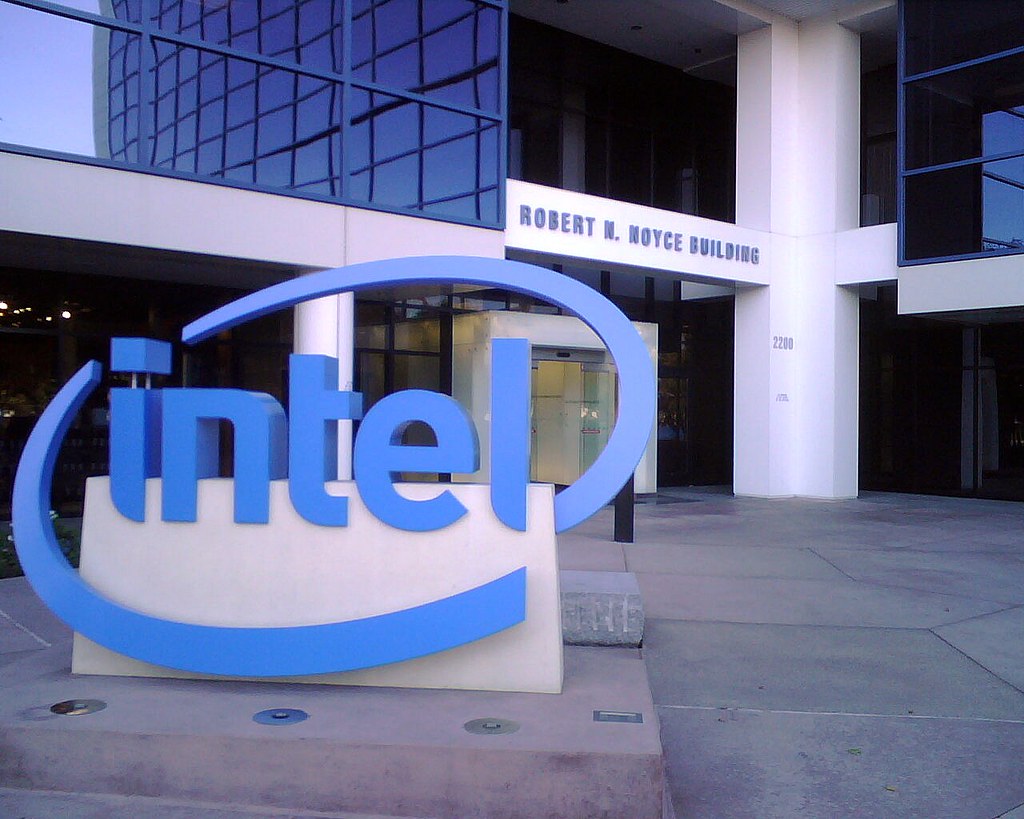
The White House framed their staggeringly large $8.9 billion investment in chipmaker Intel as an essential step to bolster U.S. semiconductor production while also protecting an industry with national security significance. This deal affords the U.S. government a 10% equity stake in the company with the condition of an additional 5% of the company if Intel sells part of its struggling foundry business. Specifically the investment is aimed at igniting domestic manufacturing of advanced “logic chips”—vital components for artificial intelligence applications and military systems at Intel plants in Arizona and Ohio. Two things are true about this Intel investment— the U.S. government can and should prioritize a strong domestic semiconductor supply chain in order to compete technologically, however, the nationalization of industry through direct equity ownership introduces issues that result in dangerous incentives for stakeholders.
Nationalizing private U.S. companies is typically considered a last resort, reserved for catastrophic economic times, like the temporary and necessary government equity stakes in U.S. automakers and banks during the Great Recession. But in recent months the U.S. government has been flirting with this approach—most clearly seen in the 2025 Nippon-U.S. Steel Merger, President Trump’s public musing about an equity stake in defense contractor Lockheed Martin, and its $400 million stock purchase in rare earths producer MP Materials in 2025.
The private semiconductor market should operate unencumbered; government intervention, especially at the manufacturing level of the supply chain will only serve to drive perverse incentives. It is dangerous because financial gain incentives become intertwined with regulatory decision making. The U.S. government’s stock ownership in Intel threatens to cloud the judgement of decisionmakers who are responsible for making unbiased regulatory choices on matters such as export restrictions and permitting in the microelectronics industry.
The core issue with the U.S. government’s equity stake, now as Intel’s largest shareholder, is that the very entity responsible for its objective regulation is actively shaping the business’ strategic decision making. By inserting itself into the private ownership realm, the U.S. government is encouraging firms to seek political favor rather than concentrate on executing their core business offerings.
It is worth noting that the U.S. government’s entanglement in Intel’s operations isn’t necessarily partisan, as it predates the Trump Administration and their equity investment. Last year the Biden Administration revoked export licenses to China, purportedly to nix sales to Chinese firm Huawei and decouple any of its Chinese military ties, causing Intel to lower Wall Street revenue guidance. Frustration with this entanglement, coupled with President Trump’s call for the CEO’s resignation, likely spurred Intel’s acquiescence to the recent equity offer; the company likely did so ameliorate political headaches more so than capitalize on any pure “business” reasons.
Meanwhile, other high profile tech companies, such as Samsung and Nvidia, have made strategic decisions clearly geared at currying favor with this Administration, coincidentally surrounding this Intel stock position announcement. Samsung weighed a licensing partnership with Intel to manufacture more products in the United States for tariff circumvention while Softbank invested $2 billion into Intel and Nvidia $5 billion for data center focused chips.
Despite this and no existing U.S.-based logic chip production, both the current and previous administration have been steadfast about domestication of semiconductor production in order to reduce reliance on foreign manufacturers and mitigate abnormal supply shocks similar to those occurring during the COVID 19 pandemic. In February 2024, Commerce Secretary Gina Raimondo stated the U.S. government will aim to produce “20% of these chips …domestically by 2030”, leveraging Intel’s production capacity to achieve this ambitious goal. President Biden also projected Intel plants in Ohio would generate roughly 30,000 construction and factory jobs, which appears highly unrealistic for the foreseeable future with the facility’s opening set for 2030, at the earliest.
Even if it takes considerable time for a domestic chip production powerhouse to organically develop, avoiding excess private market intervention is optimal. It would be more productive in furthering domestic competitiveness in the AI space for the U.S. government to shift its focus toward supporting burgeoning chip-related technology startups and cutting- edge scientific research at educational institutions that incrementally assist the overall semiconductor supply chain, even if those players aren’t upstream mega manufacturers. Especially when considering Intel is so markedly trailing its competition, it is a better use of billions of dollars than propping up a potentially sinking ship of an enterprise.
Mitchell Clark is a financial analyst for Northrop Grumman Corporation and is pursuing an MBA at Carnegie Mellon University. He holds a B.S. in Supply Chain & Information Systems from Penn State University – University Park.




 Charged Affairs