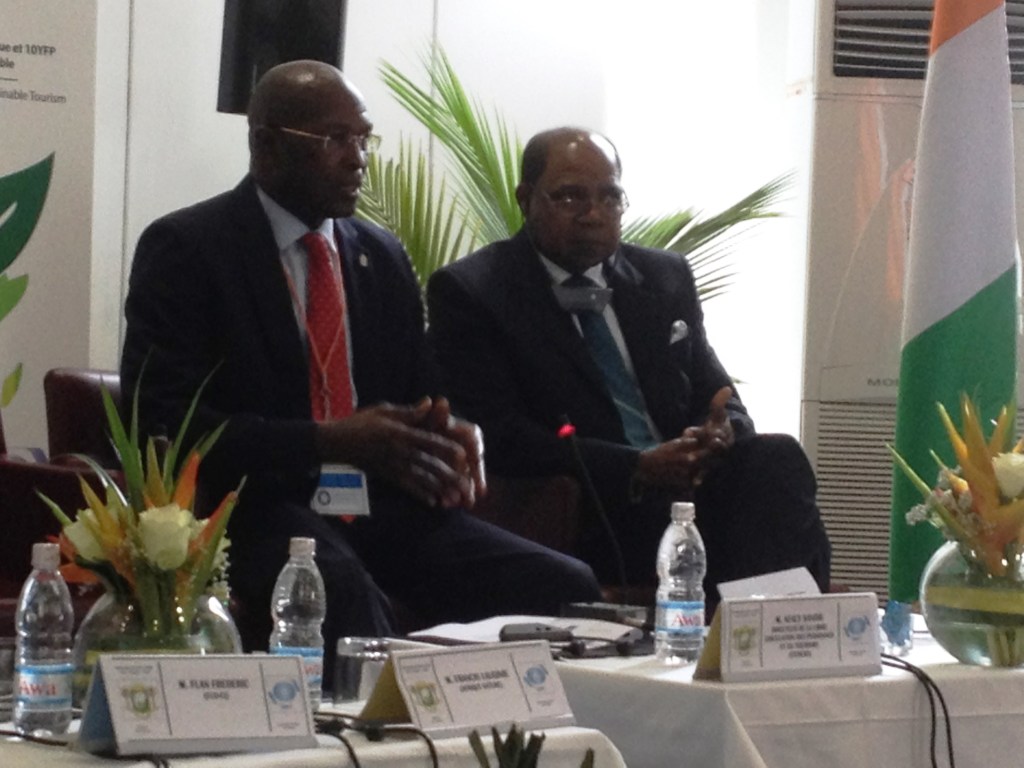
By Alec Soltes | YPFP Member | January 20, 2026 | Photo Credit: Flickr
The Economic Community of West African States is in the throes of a legitimacy crisis. This regional political and economic bloc, known as ECOWAS, fractured when the junta leaders of Mali, Burkina Faso, and Niger left and subsequently formed the Alliance of Sahel States (AES) in 2023. Their departure created a vacuum within West Africa’s security architecture in countries that had their democratically elected governments overthrown, worsening the security situation in the face of transnational terrorism. Anti-French protesters in AES countries, such as in Mali and Burkina Faso, have also directed much of their ire towards ECOWAS for its swift and severe sanctions against theirleaders. These recent developments reveal systemic and persistent challenges within the bloc itself. ECOWAS’s economic, security, and governance challenges, if left unaddressed, will lead to greater political fragmentation and instability among member-states.
To remain relevant and effective, ECOWAS leaders need to push for greater cooperation in the face of withdrawal by military rulers or risk its very existence as a long-term, capable intergovernmental body.
Economy
One of ECOWAS’s main goals is to promote economic integration. Despite its efforts to form a European Union-like economic union, ECOWAS has not fully implemented key protocols of its free-trade zone. There is generally free movement of people and cross-border infrastructure and energy cooperation, but certain non-tariff barriers persist, such as inspection delays, import bans, and byzantine customs rules. Meanwhile, a new regional “Eco” currency proposed by the bloc has faced repeated delays, with the next target date of July 2027. However, the Eco, if implemented, would be transformative in binding the region’s economies together, similar to the effect of the Euro. ECOWAS member states have failed to take the necessary steps to launch and integrate the Eco, preventing the bloc from realizing the full economic benefits of this new currency.
Security
Another challenge for ECOWAS states is the weak institutional capacity of their militaries. With the threat of jihadist groups affecting many of its member states, specifically Benin, member states need to make significant upgrades to their ISR and ground capabilities. Regional militaries are often underfunded and ill-equipped. Though there is a common interest in countering the various jihadist groups like JNIM and Islamic State in the Greater Sahel operating in West and Central Africa, few moves have been made to improve interoperability among ECOWAS militaries. The lack of political will and investment in interoperability is highly problematic because it undermines their ability to conduct joint operations and coordinate logistics against the terrorist threat.
Governance
Though ECOWAS been far from a hotbed of stable, consolidated democracies, in comparison to other regions in Africa, democracy has had an easier time taking root. As a regional organization, ECOWAS is composed of a parliament, a Court, a Council of Ministers, a Commission, and an Authority of Heads of State and Government, all modeled after the European Union. Broader institutional awareness of ECOWAS’s organs is needed for its institutions to work effectively, as well as to support ECOWAS’s mission of promoting democracy and good governance throughout the region.
A Path Forward
Now more than ever, the very survival of the West African economic project hangs in the balance. To face these challenges, the remaining members must deepen the level of economic integration by fully implementing policies that have already been agreed to on paper, such as a uniform customs regime, and commit to further binding their economies together.
Direct elections to the ECOWAS parliament would add a new layer of political participation, even as plans for this have been repeatedly delayed. A NATO-style arrangement in the region, while certainly aspirational to the point of being unlikely, is something that is worth pursuing. The bloc can begin by holding regular exercises among willing participants as a trust-building measure between its members’ militaries. It could also support the creation of a standalone military force, as leaders have already resolved to do.
Enforcing existing provisions in ECOWAS’s founding treaties, increasing military interoperability and effectiveness, and beefing up ECOWAS’s political organs will be necessary to dig ECOWAS out of the hole it finds itself in.
One cause for hope is ECOWAS’s increasing cooperation with civil society at the ECOWAS level. As a critical element in functioning democracies, their inclusion will serve to bolster participation in civic and political life.
Alec Soltes is a freelance researcher and an elections analyst with Africa Elects. He holds a B.A. in Foreign Affairs from the University of Virginia.

 Charged Affairs