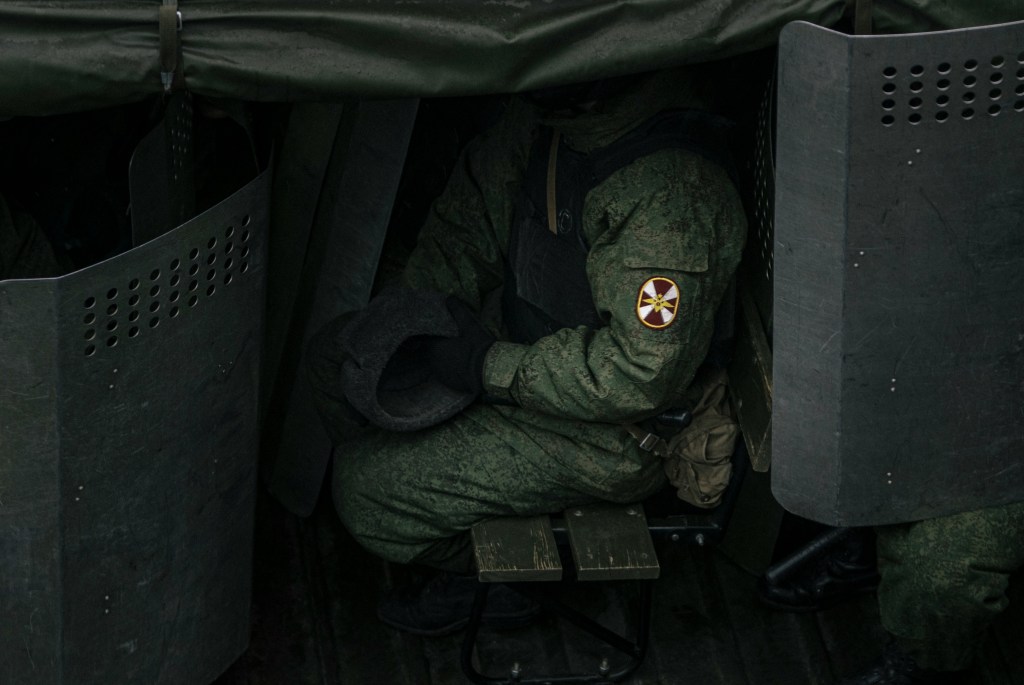
By Garrett M. Wright | 2026 Rising Expert in Africa Policy | May 31, 2026 | Photo Credit: Erik Hathaway
How sub-state conflict in Ethiopia may catalyze a war more damaging than wars in Ukraine or Iran.
An internal ethnic conflict in Ethiopia currently threatens to domino into a broader regional conflict, compounding on global economic instability wrought by ongoing wars in Iran and Ukraine. Political turmoil in Ethiopia could escalate due to Ethiopia’s June 1 elections, which might trigger a crisis with more than double the impact on global maritime trade than that of the Iran War. The United States should reinstate emergency aid to Ethiopia aimed at reducing widespread desperation and political grievances in preparation for the elections, while partner donors pursue diplomatic agreements to assuage fears of inter-state conflict throughout the region.
The security of the Red Sea, through which roughly 16% of global maritime trade passess, is largely dependent on stability in the Horn of Africa. While access to the Bab el-Mandeb Strait has already been threatened by non-state groups from Somalia and Yemen, a regional war involving multiple actors in the Horn of Africa would incentivize parties to violently resist attempts at external intervention, likely by restricting access to the Red Sea. This would destabilize global supply chains to a much greater extent than the Iran War’s strangulation of the Strait of Hormuz or the Ukraine War’s sanctions regime against Russia.
Political stability in Ethiopia is critical for broader security in the Horn of Africa. Since the fragile Pretoria Agreement ended the Tigray War in 2022, tensions have steadily risen between the Ethiopian national government, the ethnic groups which make up its federalist structure, and their Horn of Africa neighbors. As federal forces and ethnic militias mobilize, simmering tensions between Ethiopia and its neighbors could incentivize intervention from other regional forces, threatening a broader war that would inflict massive casualties and destabilize global supply chains.
While there are several insurgencies occurring simultaneously in Ethiopia, the three most prominent consist of Fano militias in the northwestern Amhara region, Oromo militias in the central Oromia region, and Tigrayan militias in the northern Tigray region. Many of the regions in Ethiopia’s ethnic federalist system are meant to represent one or more of Ethiopia’s ethnic groups, meaning ethnic coalitions within each region are incentivized to compete for land, resources, and political influence in a decentralized and insecure environment.
The current federal government was at one time a bastion of peace; Abiy Ahmed earned the Nobel Prize in 2019 for his rapprochement with Eritrea, and the 2022 Pretoria Agreement did present real opportunity for ethnic coexistence in Ethiopia. However, Amhara and Oromia were not included in the negotiations, and therefore critical components of both federal and Tigrayan threat perceptions were largely ignored.
The primary militia in the Oromia region, the Oromo Liberation Army (OLA), allied with the Tigrayan People’s Liberation Front (TPLF) during the Tigray War against federal and Amhara forces. Despite being a major actor in the war, the OLA was not included in the Pretoria Agreement negotiations and therefore was unable to advocate for its interests in reversing Oromo marginalization and securing Oromia’s territory. Several subsequent peace negotiations with the federal government have failed since 2022.
Fano militias from Ethiopia’s Amhara region present a significant threat to Ethiopia’s stability. While Fano insurgent groups are less likely to spark a regional conflict directly, they worsen the conditions which drive potential external involvement. Fano militias competing with Tigray over disputed territory in the Western Tigray area worsens the government’s relationship with the TPLF, as it fails to enforce principles of the Pretoria Agreement guaranteeing that land for Tigray. Recent consolidation of Fano militias, an ongoing surge of political violence in the Amhara region seemingly aimed at the June 1 election, and the salience of Amhara aggression in Tigray’s security perception should illustrate that Fano insurgencies are a crisis to be addressed, not a nuisance to be managed.
In response to political exclusion and military intervention by both federal forces and Fano militias in Tigray, the TPLF has reformed the pre-war regional government that was dissolved by the 2022 Pretoria Agreement. Violence between Tigrayan and federal forces has grown increasingly frequent, illustrating that the optimism for long-term peace brought by Prime Minister Abiy Ahmed has failed to spark sustainable political reconciliation.
Past Ethiopian elections illustrate a pattern of repression and violence that will likely be heightened this year due to a politically volatile environment throughout the country. This year’s election will be the first since the end of the Tigray conflict, which killed hundreds of thousands of people, and foreign aid critical for meeting basic needs is now at its lowest level in decades following the United States’ massive reductions in 2025. Heightened ethnic tensions and troop deployments in contested territories may worsen political violence prominent in Ethiopian elections, especially as the largest opposition groups are intimidated, banned, and forced to boycott.
Ethiopia’s upcoming June 1 parliamentary elections, which are unlikely to be free or fair, may serve as a flashpoint for broader organized violence. Ethiopia has a history of political repression and election violence, and the federal government has already banned the Tigray region’s TPLF as a political party. The National Election Board of Ethiopia has announced that it would not facilitate voting in 46 constituencies throughout Amhara and Tigray citing insecurity concerns, likely to reduce insurgents’ ability to disrupt the election which is largely viewed as an empty legitimization campaign for the federal government. Troop buildups on the Tigrayan border, once delayed by oil shortages due to the war in Iran, may be deployed to quell election violence, dramatically escalating the conflict.
Neighboring countries in East Africa have become increasingly entangled in Ethiopia’s internal conflict, threatening to drag the entire region into war. Eritrea has already deployed troops in Tigray and strengthened its ties with the TPLF and Fano militias in response to the Ethiopian government’s escalatory threats to gain access to the Red Sea through force. Ethiopia’s support for the Rapid Support Forces has drawn the ire of the Sudanese Army in Sudan’s civil war, and the Ethiopian government’s memorandum of understanding with Somaliland created a diplomatic crisis heightening Somalia’s threat perception of Ethiopia. Ethiopia’s adversarial relationship with these three neighbors incentivizes zero-sum behavior, worsening relations throughout the Horn of Africa and increasing the likelihood of a regional war.
The Horn of Africa’s location along the Red Sea will spark global interest, particularly in light of the ongoing crisis in the Strait of Hormuz, further complicating the web of actors that may become involved to minimize disruption of global supply chains. While it’s unlikely we will see large-scale troop deployments from coalitions outside the Horn of Africa, external states will seek to influence the impending conflict to protect their economic interests in the Red Sea. Trade between Europe and Asia is heavily reliant on the Red Sea, with alternative routes around the Cape of Good Hope adding 10+ days of travel time. Ethiopia and its lifeline trading partner Djibouti are critical checkpoints for Gulf States seeking to import precious metals and critical minerals from the continent, and pursuit of dominance over the Red Sea may draw more direct interventions from actors like Saudi Arabia, Egypt, and the UAE. Ethiopia’s plans to build several dams on the Nile River present another threat to Egypt, which draws 90% of its freshwater from the strategically important waterway.
There are some existing mitigations that may delay conflict escalation in Ethiopia. The United Nations Development Programme’s SEEDS2 Program, aimed at modernizing and democratizing the Ethiopian elections process, could serve to reduce the prevalence of election-related violence around June 1. This program’s weakness is that its primary national partner is the National Elections Board of Ethiopia (NEBE), meaning that its implementation could be spoiled by voter suppression or the crisis of legitimacy facing the federal government. Other reconciliation efforts, such as the National Dialogue Commission, have failed largely due to elite capture and political manipulation.
The United States should reinstate some targeted humanitarian aid to Ethiopia cancelled in the 2025 purge to meet the immediate threat of widespread election violence. Aid aimed at reducing food and health insecurity will reduce some of the desperation that drives political grievances against the Ethiopian government, providing resiliency to the inevitable shock of an election largely perceived illegitimate. The United States should work closely with other donor partners, primarily in Europe, to ensure aid aligns with the goal of long-term stability in Ethiopia and contributes to as little aid dependency as possible.
Donor countries and multilateral institutions should prioritize pressuring the Ethiopian government toward domestic political reform and diplomatic agreements for its access to the Red Sea. Internal reconciliation initiatives should focus not only on the Tigray region, but also Amhara and Oromia, to holistically address ethnic groups’ political grievances. Ethiopia should seek cooperative agreements with Eritrea, Djibouti, and Somalia to enhance its Red Sea access peacefully with support from external actors.
Long-term stability in the Horn of Africa is reliant on the Ethiopian government’s ability to regain its own legitimacy and dampen the ethnic tensions driving widespread violence throughout the country. Repressing political opposition and excluding influential components of Ethiopian society will not build that trust. The international community has a responsibility to provide emergency assistance and incentivize sustainable reform within the Ethiopian government before Ethiopia’s conflicts spark all-out war in the region.
Garrett M. Wright is a Federal and International Programs Coordinator with the Applied Research Institute, where he coordinates programs which bridge the gap between innovators and the US defense technology community for agencies like DARPA, the CDAO, and other DoD activities.
Garrett is also an Associate Editor for the Georgetown Security Studies Review, where he edits and authors articles covering political affairs in Sub-Saharan Africa. Named the 2026 Rising Expert in Africa Policy by Young Professionals in Foreign Policy, Garrett has held several positions which guide his expertise on the African continent. With the Africa Faith and Justice Network, he supported congressional advocacy to ensure that foreign aid directed to
Africa was just and sustainable. With the Critical Threats Project, he used open-source intelligence techniques to record and analyze geopolitical developments in West Africa, tracking complex networks of Salafi-jihadi groups in the region. Garrett has several published articles covering political crises across Sub-Saharan Africa and regularly interfaces with international partners in his role with the Applied Research Institute.
Garrett is a current master’s candidate with the Georgetown University Security Studies Program, concentrating on International Security. Garrett graduated summa cum laude from Indiana University, majoring in Law & Public Policy and minoring in International Relations and Philosophy.