By Elli Mohajeri and Mariana Kordorsky | November 5, 2026 | Photo Credit: Hudson Thomas
Protecting society from addictive tech requires more courage than banning under-16s.
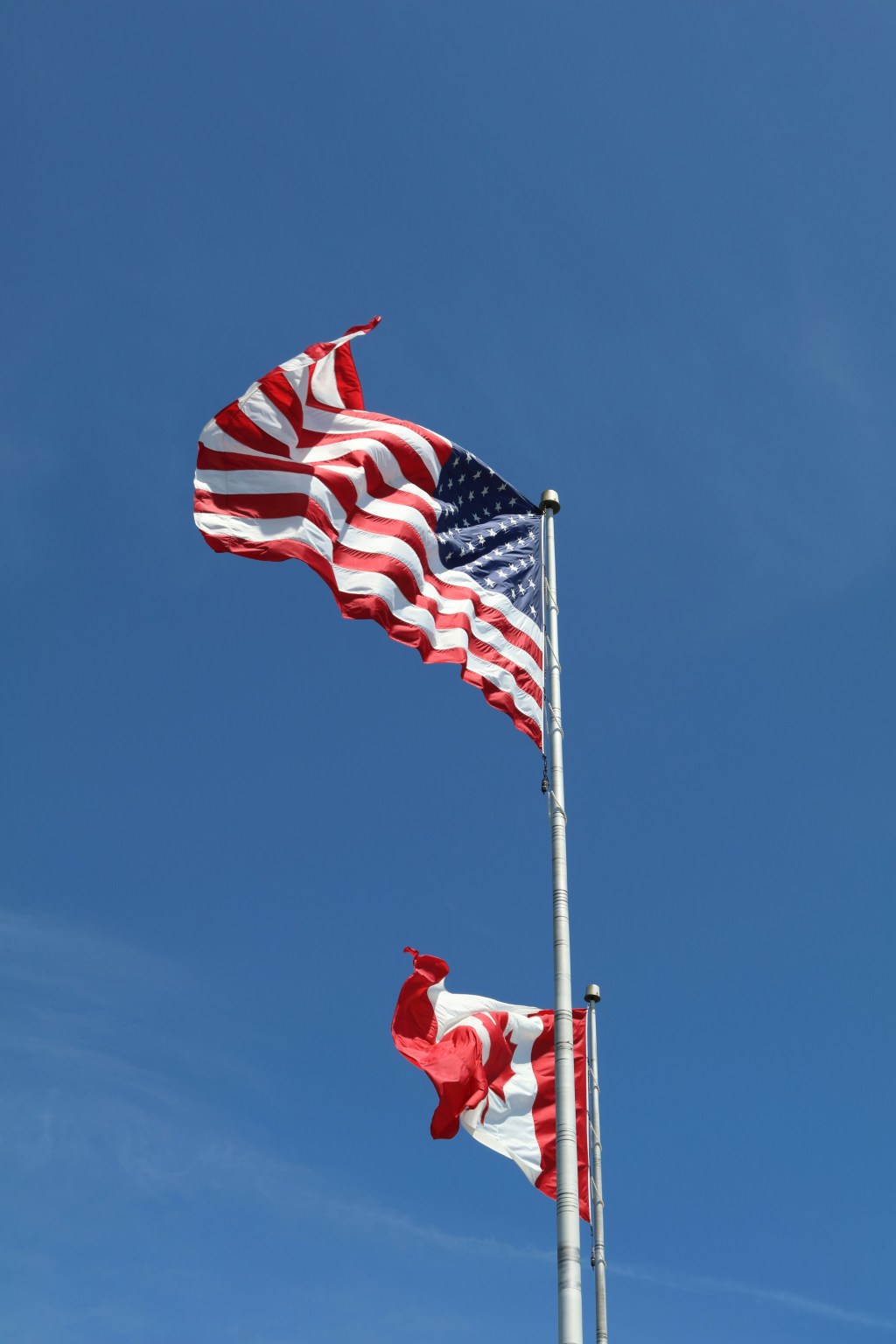
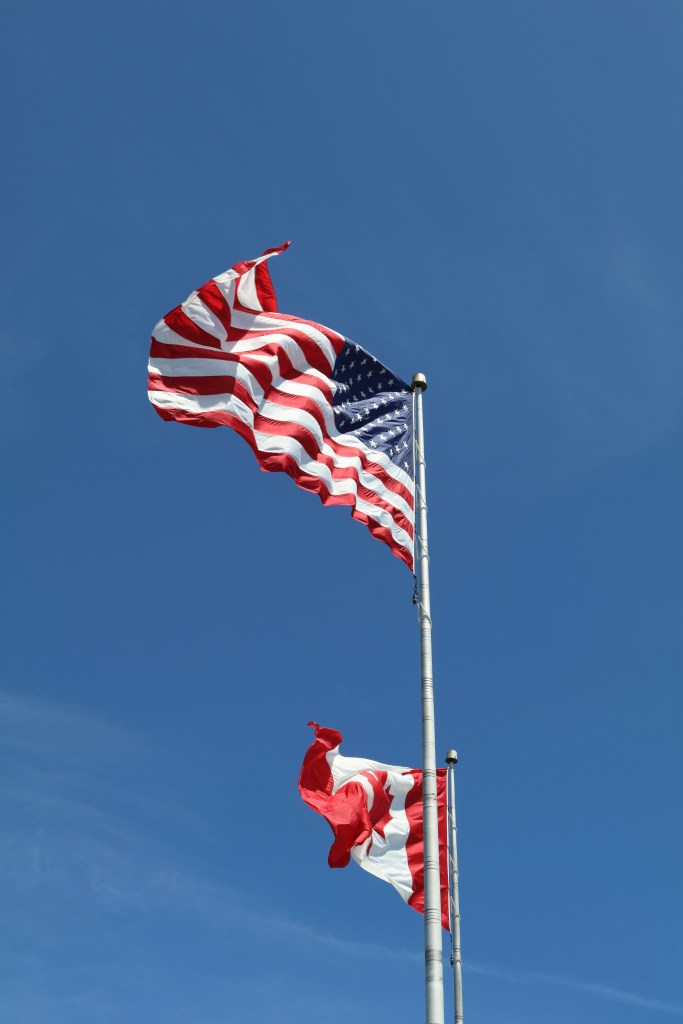
One of the hallmarks of President Trump’s “America First” protectionist agenda is the broad use of tariffs on adversaries and allies alike. A prime example of this is the escalating trade war between the United States and Canada, longstanding economically interdependent neighbors. Most recently, Canada imposed retaliatory tariffs of up to 50% on $27.6 billion worth of US goods imported into the country. The economic consequences affect domestic consumers and businesses in both nations, weakening their purchasing power yet interestingly has less uniform effect on political perceptions. A wider set of variables, including economic exposure, partisanship, and national solidarity, are moving the needle of people’s willingness to bear tariff costs.
Patriotism Battles Personal Costs
As the trade war intensifies, agencies are polling to gauge public opinion in abstract patriotic terms and when concrete personal costs are involved. Politico polls show that Canadians are mostly supportive of Carney’s retaliatory tariffs. In Canada, 71% of citizens agree with Carney’s reciprocal tariffs, 57% support tariffs matching President Trump’s, and 57% say higher prices are ‘worth it’ to stand up to Trump.
Build Canada’s poll of 1,696 Canadians from late August to September showed that, when framed abstractly, 75% would hold firm despite prolonged economic costs. However, the results do not specify reactions to concrete personal costs. When asked about a noticeably higher chance that someone in their household could lose a job, about 68% of the same respondents said that consequence was unacceptable, including 46% who called it “completely unacceptable.” Polling data suggest that support for retaliatory measures persists when costs are stated abstractly. However, people’s willingness to fight back decreases when costs are framed as personal.
Economic preferences differ by employment status and subsequent exposure to the active economy. In Canada, 54% of retirees will accept higher costs indefinitely, while only 36% of full-time workers are willing to do the same. Furthermore, among workers, those in blue-collar jobs show more resistance, with 44% accepting no higher costs versus 20% of those in white-collar jobs.
The Role of Political Identity in Tariff Tolerance
Partisanship is another variable that further complicates a purely exposure-based reading of the available data. In Canada, 96% of Liberal voters support holding firm on retaliatory tariffs, compared with only 41% of Conservatives. The numbers imply a 55-point gap on party identification, larger than any economic-exposure gap in the dataset. This could suggest that the stated-versus-revealed gap tested by Build Canada may be substantially a partisan identity effect rather than a universal cognitive pattern about abstract versus concrete costs.
In the United States, polls illustrate a relationship between tariff reactions and symbolic political dimension, with President Trump fueling tension by renaming Lake Ontario to Lake America via executive order and stating the US doesn’t “need [Canada] for anything.” The latest Economist/YouGov poll reflects that most Democrats (87%) and Independents (64%) oppose raising tariffs on Canada, compared to only 25% of Republicans. Republicans who identify as MAGA are far more likely than those who don’t to support increasing Canadian tariffs (74% vs. 27%). This has extended beyond tariffs to wider changing attitudes towards Canada itself. About 38% of Republicans now view Canada as unfriendly or an enemy, by far the highest level in the past decade.
Lastly, self-reported behavior involves actions with real explicit costs that individuals absorb voluntarily. In Canada, 69% of respondents purchased Canadian products even at a premium, 57% canceled or avoided traveling to the US, and 55% stopped buying certain American brands. This suggests that abstract support can translate into action. It also implies that while people may not accept systemic losses, they are willing to make certain sacrifices voluntarily.
Conclusion
From supply chains to existing infrastructure, despite the US economy being much larger than Canada’s, the economies of both countries remain closely intertwined. On September 8, the US set import bans on some Canadian imports including specific dairy products, alcoholic beverages, and motor vehicles with the long-term political effects yet to be seen. More broadly, in a YouGov poll, 68% of Americans say Trump’s tariffs have hurt average Americans, including 50% who say they have hurt a lot, and only 14% say they have helped. Beyond party politics, the diverse reactions to the broader geopolitical trade war illustrate the much deeper influence of political identity, national interests, and ideological solidarity on economic self-interest. As opposed to producing uniform opposition or patriotic acceptance, the market consumer’s reactions to tariff costs are motivated not only by personal financial utility but also by partisan identity.